
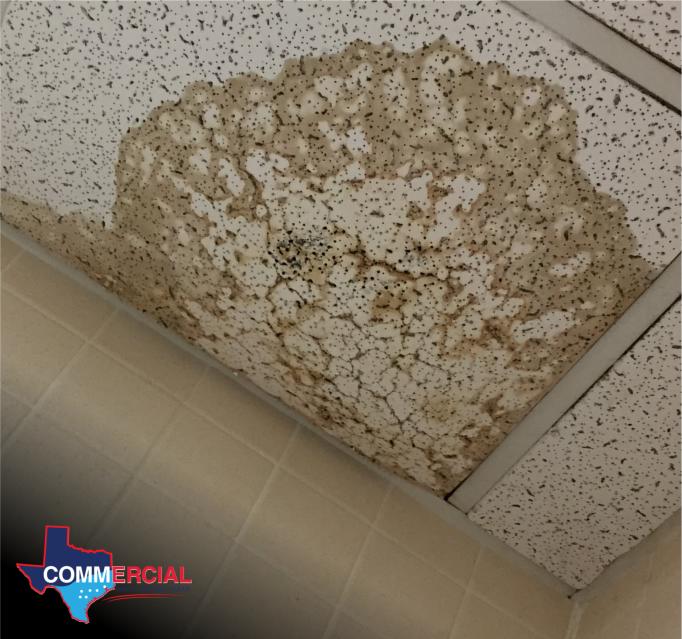
When hail hits Dallas-Fort Worth, commercial buildings usually get two problems at once. The roof is damaged, and water starts finding its way inside. Property managers often call a roofer for the first problem and a restoration company for the second, and the two never talk. That is how buildings end up with dry ceilings under a roof that still leaks, or a new roof over insulation that is still wet.
This article explains why roof repair and interior water damage cleanup need to be planned together, and the order that works best.
How One Storm Creates Two Jobs
Large hail fractures single-ply membranes, knocks granules off modified bitumen and dents metal roofs, flashing and rooftop units. Wind lifts roof edges and drives rain under flashing. Once water gets past the roof, it soaks insulation, runs along the deck and drips through ceilings, light fixtures and walls, sometimes far from the actual damage.
The roof damage is a construction problem. The interior damage is a drying and restoration problem. Both have to be solved, and the timing between them matters.
The Order That Works
- Temporary roof protection. Tarps or temporary patches stop more water from coming in. Nothing inside can dry while the roof is still open.
- Interior extraction and safety. Standing water is removed, wet ceiling tiles are taken down before they fall, and electrical hazards are addressed.
- Moisture mapping and drying. Moisture meters and thermal imaging show how far water traveled. Drying equipment runs until readings reach target levels.
- Roof inspection and scope. The roof is inspected in detail, including core cuts where needed, to decide between repair and replacement.
- Permanent roof work. The roof is repaired or replaced, and wet roof insulation is removed rather than covered.
- Interior rebuild. Ceilings, drywall, insulation and finishes are replaced once the building is dry and watertight.
Why Coordination Matters for the Claim
Insurance carriers look at the whole loss. When roof and interior documentation tell the same story, with the same storm date, matching photos and consistent moisture readings, claims move faster. When they conflict, adjusters ask questions. A shared timeline and photo log between the roofer and the restoration team helps.
Wet Roof Insulation Is the Hidden Cost
The most expensive mistake after a hail storm is leaving wet insulation in the roof. It adds weight, loses its insulating value, and can rust steel decks or rot wood ones. It also keeps feeding moisture into the building below. A roofer who core-cuts and scans the roof before deciding on repair or replacement protects the interior work too. If you are weighing options, this overview of commercial roof replacement in Dallas explains how hail damage, roof systems and replacement decisions fit together.
What Property Managers Can Do Right Away
- Record the storm date and photograph roof and interior damage separately
- Call for temporary roof protection and interior extraction the same day
- Ask both contractors to share photos and findings
- Do not let new ceilings go up until moisture readings confirm the area is dry
- Keep every receipt for emergency work
Storm Water Damage Help in Texas
We handle commercial water damage after storms across Texas, from extraction and drying to documentation for your carrier. If a storm has put water inside your building, call us and we will coordinate the drying with the roof work so the building ends up dry and watertight.
