
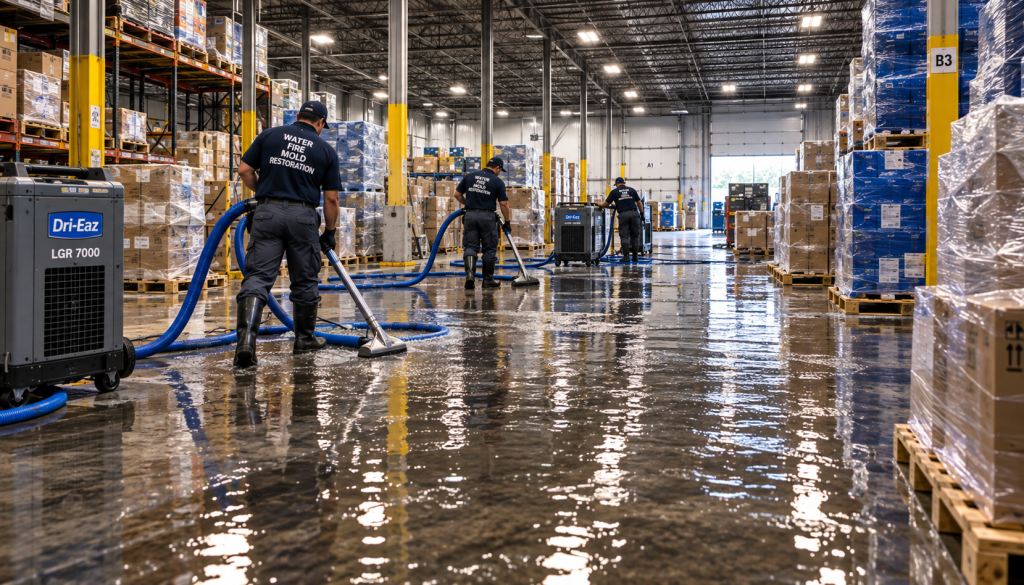
Texas distribution centers are built for moving freight, not for holding back water. Their wide slabs, long rows of dock doors and huge flat roofs make them efficient, and they also explain why the same two places fail first in almost every warehouse flood: the dock doors and the roof drains.
Dock Doors: The Low Point of the Building
Truck courts slope toward the building so trailers sit level at the dock. In a heavy rain, that slope sends water straight at the doors. If trench drains are clogged or overwhelmed, water rises against the door seals and runs under them onto the slab.
- Clean trench drains and catch basins in the truck court before storm season
- Replace worn bottom seals and dock shelters
- Keep pallets and stock back from the doors in flood-prone buildings
Roof Drains: A Small Clog, a Big Roof
A warehouse roof can cover several acres, and all that water has to leave through a handful of drains. One clogged drain can create a pond that finds the nearest weak seam. Water then comes through the roof over racking, often far from the actual opening.
- Inspect and clear roof drains and scuppers in spring and fall
- Check that overflow scuppers are open
- Repair seams and flashing near drains, where ponding is worst
What Happens to Inventory
Water on a warehouse slab wicks into pallets, cartons and anything stored on the floor or bottom racks. Damage spreads for hours after the rain stops. The first priority in any warehouse flood is stopping the source, moving dry stock out of the water’s path and documenting what was affected.
Storm Water Is Contaminated
Water that came across a truck court carries oil, dirt and debris. Restoration standards treat it as contaminated, which means porous materials it touched may need to be discarded and the slab and lower walls need cleaning and sanitizing before drying.
Keeping Shipping Moving
Most warehouses can keep running during cleanup if the work is zoned. Drying equipment is placed in sections, forklift routes are rerouted, and receiving shifts to unaffected docks. Clear communication with customers about timing matters as much as the drying itself.
For a detailed look at how one North Texas distribution market handles this, see this guide to commercial water damage in Grand Prairie, where warehouses along Interstate 20, Interstate 30 and State Highway 360 face exactly these risks.
Before the Next Storm
- Walk the truck court and roof with your maintenance team
- Clear every drain, inside and out
- Mark sprinkler and water shutoffs
- Have a restoration contractor’s number ready before you need it
Warehouse Flood Help in Texas
If your warehouse takes on water, call us. We handle extraction, drying and documentation for commercial properties across Texas and work around your shipping schedule.
