
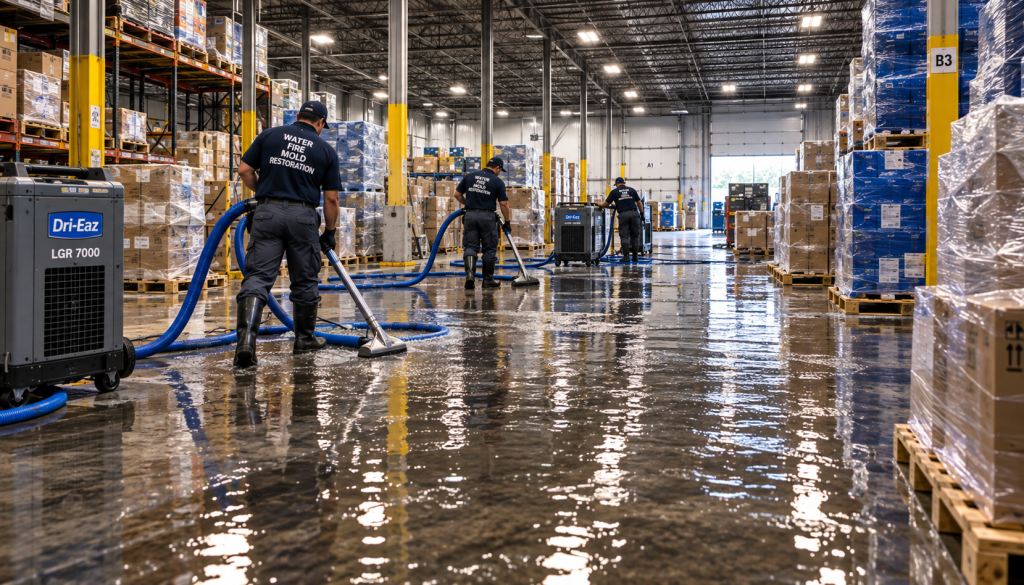
Business flood cleanup is about more than drying floors. When floodwater enters a commercial property, it threatens three things every business depends on: equipment, inventory, and the spaces tenants use every day. Machines can short out, stock can spoil, and tenants can lose weeks of work. Your cleanup plan decides how much of that loss you can prevent. This guide explains how to protect each of these assets, step by step, from the moment water enters until the space is ready again.
Business owners, landlords, warehouse operators, and property managers can use it to plan before a flood and to act quickly during one.
Why Floods Threaten Business Assets
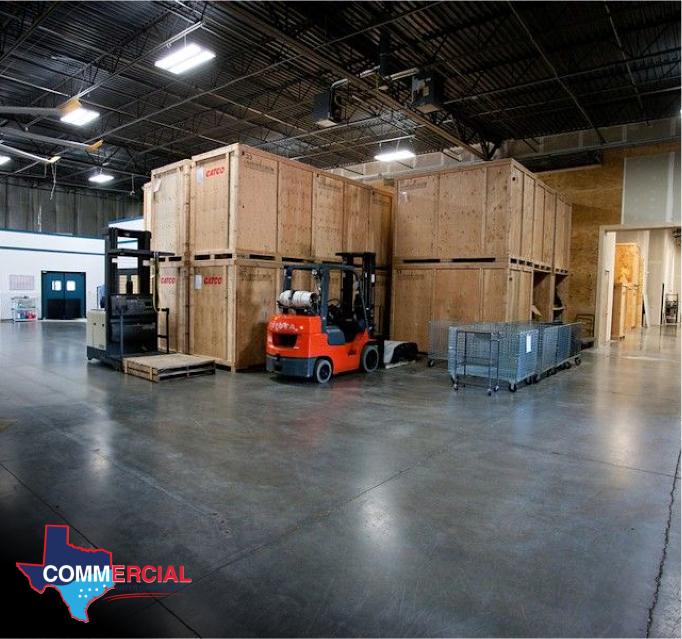
Floodwater is dirty, heavy, and fast. It carries mud, sewage, and chemicals into the building. It also rises quickly, often reaching the bottom shelves of storage racks, the base of machinery, and the lower walls of every suite. Because floodwater is dirty, you cannot simply dry and reuse many items it touches.
That makes speed and planning critical. The faster you protect equipment and inventory, the more you save. And the clearer your plan for tenants, the faster everyone gets back to work.
Step 1: Safety and Power Shutdown
Safety always comes first. Before anyone enters, make sure power is off to flooded areas. Electrical panels, charging stations, and machinery can become deadly when wet. If you cannot reach the main panel safely, call the utility company.
Also watch for gas leaks, weak floors, and debris. Workers should wear boots, gloves, and eye protection. The OSHA flood cleanup guidance covers these hazards in detail.
Business Flood Cleanup for Equipment
Equipment is often the most expensive asset at risk. Here is how to protect it:
- Do not restart wet equipment. Turning on a flooded motor or computer can destroy it.
- Document condition. Photograph each machine and note the water line.
- Move what you can. Lift small equipment and electronics to dry areas.
- Call specialists. Many machines need professional cleaning, drying, and testing.
- Check warranties. Some makers have rules for water exposure.
Forklifts, compressors, servers, and point-of-sale systems all need careful inspection before they return to service.
Business Flood Cleanup for Inventory
Inventory triage should start early. Sort stock into three groups:
- Untouched: Relocate it to a high, dry area right away.
- Wet but salvageable: Set it aside for cleaning or drying.
- Total loss: Keep it for the adjuster to inspect.
You usually cannot sell food, medicine, cosmetics, or children’s products that touched floodwater. Paper goods and cardboard packaging also tend to be total losses. Before discarding anything, record SKUs, quantities, and photos.
Business Flood Cleanup for Tenant Spaces
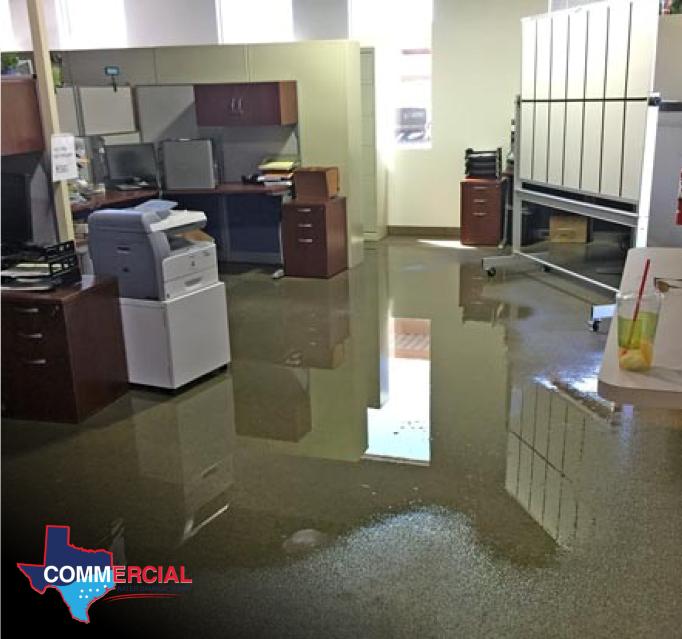
In multi-tenant buildings, flooding often affects several suites at once. Each tenant has different needs, schedules, and contents. So coordination is key.
Start by notifying every affected tenant. Explain the situation, list closed areas, and set a time for the next update. Then arrange access for the cleanup crew. Keep a log of entries and approvals. Also clarify early which repairs fall to the landlord and which fall to tenants, based on each lease.
Water Removal and Tear-Out
Once assets are protected, crews remove standing water with pumps and extractors. Then they shovel out mud and haul away ruined materials. Drywall that touched floodwater usually needs a flood cut. Carpet, pad, and insulation typically go as well. Our flood cleanup services page explains this process.
Cleaning and Sanitizing
Next, crews clean every remaining surface, working from the top of each wall down to the floor so dirty water does not drip onto clean areas. They scrub floors, wall framing, racks, and fixtures. Then they apply antimicrobial treatments to reduce bacteria and mold. Metal shelving and sealed concrete can usually be saved with proper cleaning.
Drying the Building
With surfaces clean, the drying phase starts. Fans and dehumidifiers keep running until the meters show normal levels. In large warehouses, crews may use desiccant dehumidifiers and temporary heat. Technicians check readings every day and adjust equipment as areas dry.
Keeping Business Running During Cleanup
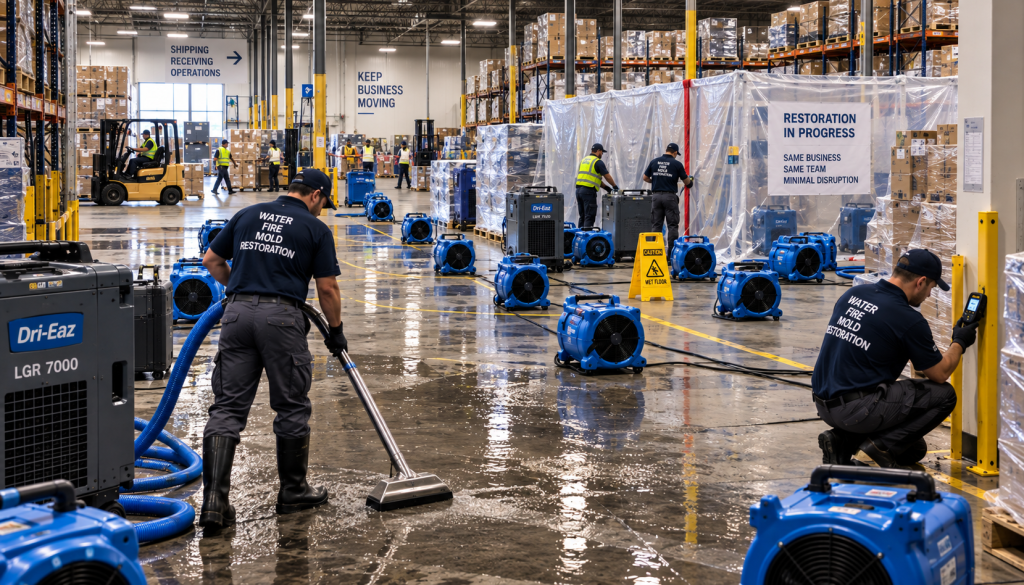
Many businesses can keep operating in part of the building. Here are a few strategies:
- Zone the work so dry areas stay open.
- Move inventory to another location or trailer storage.
- Shift shipping to unaffected docks.
- Schedule heavy cleanup after hours.
- Set up temporary workspaces for displaced tenants.
Our disaster planning page offers ideas for staying open during recovery.
Business Flood Cleanup for Records and Data
Paper files and computer data are easy to forget in the rush. Yet they can be some of the hardest things to replace. So move important files off the floor as soon as you can. If papers are already wet, place them in sealed bags and freeze them. A document recovery company can often dry frozen papers later.
For computers and servers, do not turn them on. Instead, unplug them and move them to a dry room. Then call your IT team or a data recovery service. In many cases, the hard drives can be saved even when the machine cannot. Planning for records is a small but important part of business flood cleanup.
A Simple Business Flood Cleanup Timeline
Every flood is different, but most follow a similar pattern:
- Day one: Make the site safe, shut off power, and protect key assets.
- Days one to three: Remove water and mud, tear out wet materials, and clean.
- Days three to ten: Dry the building and check readings every day.
- Weeks two to six: Rebuild walls, floors, and finishes.
Of course, large or deep floods can take longer. Still, a clear business flood cleanup timeline helps you plan staff, shipping, and tenant moves.
Insurance and Documentation
Flood claims can be complex. Many commercial property policies exclude flood, so coverage may come from a separate flood policy. Keep detailed records of damaged equipment, lost inventory, cleanup costs, and lost income. Tenants should also document their own losses for their policies.
Reopening Tenant Spaces Safely
Before tenants move back, confirm that the space is truly ready. First, check that moisture readings are normal in walls and floors. Next, make sure an electrician has cleared every circuit that got wet. Then confirm that the air smells clean and that no mold is visible. Finally, walk the space with each tenant and note any small fixes. A careful handover prevents repeat visits and builds trust with your tenants.
Preparing for the Next Flood
- Store inventory on pallets and upper shelves.
- Raise critical equipment and electrical panels where possible.
- Keep an up-to-date asset list with photos.
- Know your flood risk and coverage.
- Choose a restoration partner in advance.
The Texas Division of Emergency Management also shares preparedness resources for businesses.
FAQ on Business Flood Cleanup
How fast should business flood cleanup start?
As soon as the building is safe. Mold and corrosion can begin within a day or two, especially in warm Texas weather.
Can flooded equipment be saved?
Often, yes, as long as nobody turns it on first and a specialist cleans and tests it.
Who handles tenant contents?
Usually the tenant, through their own insurance, though landlords often help coordinate.
Protect What Matters
Fast, organized cleanup protects your equipment, stock, and tenants. Visit our flood damage services page, or call our team today.
