
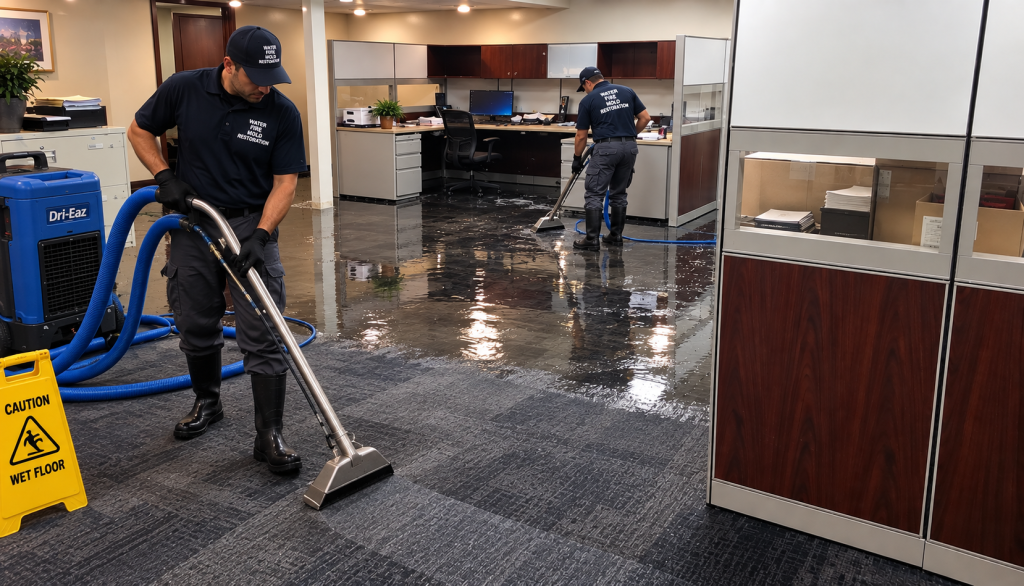
Austin water damage restoration rarely happens in an empty building. Tech companies still need their engineers at their desks, restaurants still need to serve lunch, and clinics still need to see patients. Meanwhile, restoration crews need room to remove wet materials, run loud drying equipment, and move hoses and cords through the space. Getting both jobs done at the same time takes a clear plan. This guide explains how to coordinate restoration around daily business operations, so your Austin business keeps moving while the building recovers.
Office managers, operations leaders, and property teams across Austin, Round Rock, and Cedar Park will find practical steps here for every stage of the job.
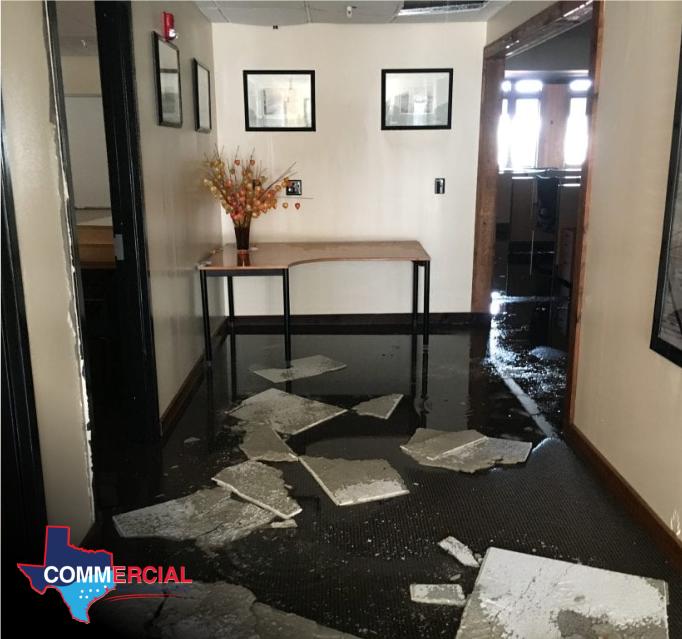
Why Coordination Matters in Austin
Austin’s commercial spaces work hard. Many offices run open floor plans with dozens of workstations. Retail and restaurant spaces depend on steady foot traffic along busy corridors like South Congress and the Domain. Medical and lab tenants often have strict rules about air quality and cleanliness.
In these settings, every closed room or loud machine has a cost. So Austin water damage restoration has to balance two goals: dry the building fully, and keep the business running as normally as possible.
Start With a Joint Planning Meeting
On the first day, hold a short meeting with the restoration project lead, your facility manager, and a business leader. Together, cover these questions:
- Which areas are wet, and how far did the water spread?
- Which spaces are critical to daily operations?
- When are your busiest hours and days?
- Who needs to approve closures, noise, or after-hours work?
- How will the team share daily updates?
This meeting sets expectations and prevents surprises later. It also gives everyone one shared plan.
Austin Water Damage Restoration Work Zones
Next, the team divides the space into zones. Each zone gets a clear status:
- Active work: Closed while crews remove materials or clean.
- Drying: Limited access while equipment runs.
- Open: Normal use for staff and customers.
Then the crew sets up barriers and signs. Plastic containment walls keep dust inside active zones. Meanwhile, staff move to open zones, conference rooms, or home offices as needed.
Scheduling Austin Water Damage Restoration Around the Workday
Timing matters as much as layout. For example, crews can handle loud tasks like tear-out early in the morning, late at night, or on weekends. Quieter tasks, such as moisture checks and equipment moves, can happen during business hours.
For restaurants, crews may work after closing and finish before the morning prep crew arrives. For retail stores, they may close a single section instead of the whole floor. In each case, the schedule bends around the business, not the other way around.
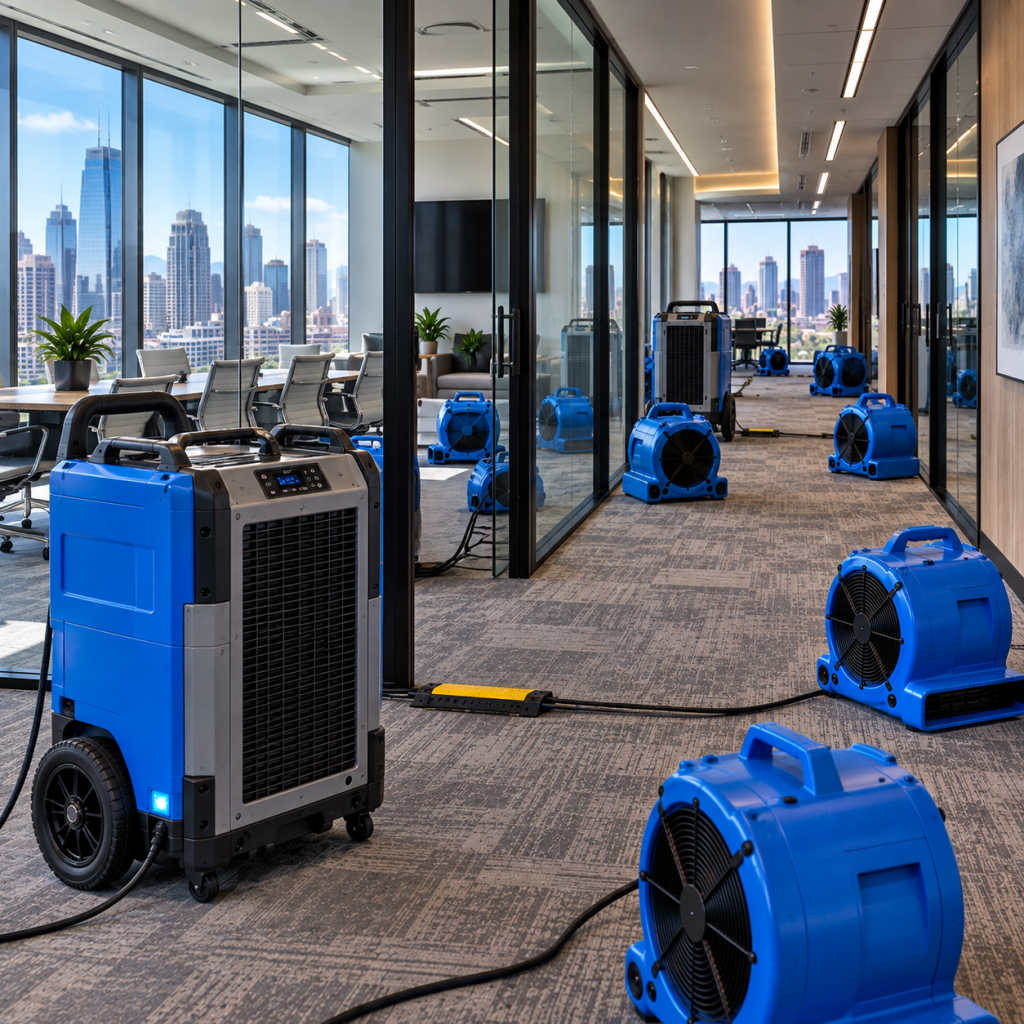
Controlling Noise in an Occupied Space
Drying equipment is loud. A room full of air movers and dehumidifiers can make phone calls and meetings difficult. To reduce the impact, crews can tuck the loudest machines behind closed doors and use flexible ducts to carry dry air to wet rooms. They can also lower fan speeds during key meetings, as long as drying stays on track.
In addition, give staff a heads-up about which areas will be loud and when. Noise-canceling headphones and quiet rooms can help teams stay productive.
Air Quality During Austin Water Damage Restoration
Air quality is a top concern in occupied buildings. Crews use air scrubbers with HEPA filters to capture dust and spores. They also seal off HVAC vents in work zones, so dust does not spread through the building. If the water was contaminated, they keep staff well away until cleaning and sanitizing are complete.
Central Texas humidity can speed up mold growth, so fast drying protects health as well as property. The EPA mold guide explains why moisture control matters indoors.
Protecting IT, Equipment, and Records
Austin offices often depend on servers, network closets, and specialized equipment. So bring your IT team into the plan early. Your tech staff may need to relocate servers, change network routes, or set up loaner laptops. Wet electronics should stay off until a specialist checks them. Paper records can go into sealed bags and a freezer until a recovery service can dry them.
Daily Updates During Austin Water Damage Restoration
Clear updates keep everyone calm. Ask the restoration lead for a short daily summary that covers progress, readings, next steps, and any changes to closed areas. Then share a simple version with staff by email or chat. If customers are affected, post updates at the entrance and on your website.
For multi-tenant buildings, keep every affected tenant in the loop. One clear contact person makes this much easier. Our office water damage page covers more tips for occupied offices.
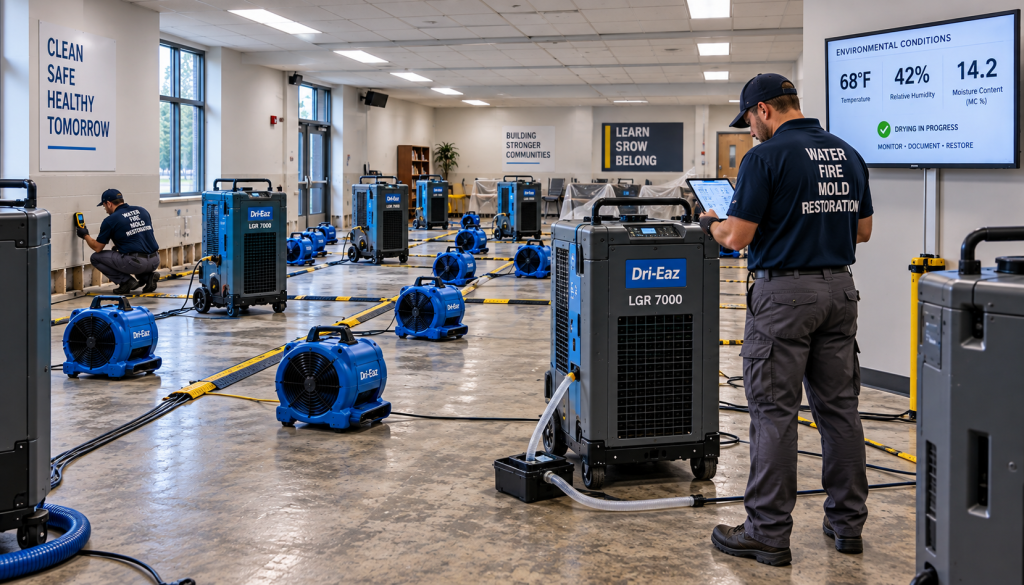
Austin Water Damage Restoration for Restaurants and Retail
Customer-facing businesses need extra care. In a restaurant, food safety rules come first. So crews keep all wet materials, dust, and equipment far from kitchens, bars, and prep areas. Many restaurants schedule Austin water damage restoration after closing time, then reopen the next morning with the dining room clean and safe.
Retail stores face a different challenge. Shoppers notice noise, cords, and closed aisles. Therefore, crews often close one section at a time and hide drying equipment behind clean barriers. Stock near the wet zone moves to a back room or another store. With this approach, Austin water damage restoration can happen in the background while sales continue up front. In both cases, a short daily check-in with the manager keeps the plan on track.
Keeping Customers Safe and Comfortable
If customers visit your space, safety comes first. Keep cords and hoses out of walkways, or cover them with ramps. Use clear signs to guide people around closed zones. Make sure exits stay open and accessible at all times. In restaurants, keep all restoration work away from kitchens and food prep areas.
Rebuilding With Minimal Disruption
Once the building is dry, repairs begin. Drywall, paint, and flooring work can also happen after hours. In some cases, crews rebuild one zone at a time, so the business never fully closes. Paint and adhesive odors can linger, so plan for good ventilation and allow time before reopening each area.
Budgeting for After-Hours Work
Night and weekend work usually costs more because of overtime. However, it often costs less than lost sales or idle staff. Ask your restoration company to price both options. Then compare the extra labor with the revenue you would lose during a daytime closure. Many policies also cover some of these extra costs, so share the numbers with your adjuster.
Choosing a Partner for Austin Water Damage Restoration
Look for a company with commercial experience in occupied buildings. Ask how they handle containment, noise, after-hours work, and daily communication. Also ask for references from Austin businesses like yours. A partner who plans around your operations is worth far more than one who simply shows up with fans.
FAQ on Austin Water Damage Restoration
Can my Austin business stay open during water damage restoration?
In most cases, yes. Work zones, containment, and after-hours shifts let many businesses stay open.
How long does drying take?
Most commercial drying takes three to five days, though dense materials or large losses can take longer.
Will the equipment be noisy?
Yes, but smart placement and scheduling can limit the impact on staff and customers.
Keep Your Business Moving
With the right plan, restoration and business can happen side by side. Visit our Austin commercial services page, or reach our Austin team today.
