
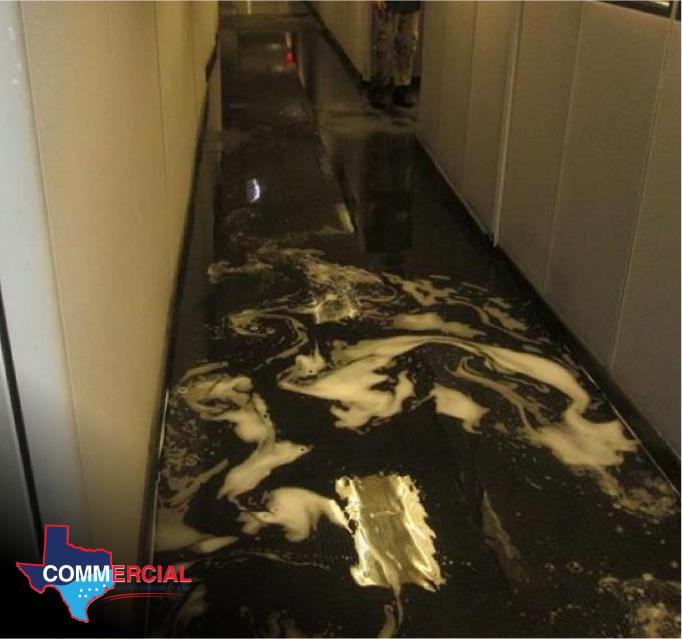
Multi-tenant flood cleanup is one of the hardest jobs a Texas property manager can face. When floodwater enters a shopping center, office park, or mixed-use building, it rarely stops at one suite. It flows under demising walls, into shared corridors, through electrical rooms, and across parking garages. Each tenant has different needs, different insurance, and different deadlines. Meanwhile, the landlord must protect the building, the shared systems, and the leases. Good planning turns that chaos into a clear sequence. This guide explains how to plan flood cleanup for multi-tenant properties across Texas.
Property managers, asset managers, and building engineers from Houston to Dallas to San Antonio can use it before and after a flood.
Why Multi-Tenant Buildings Are Different
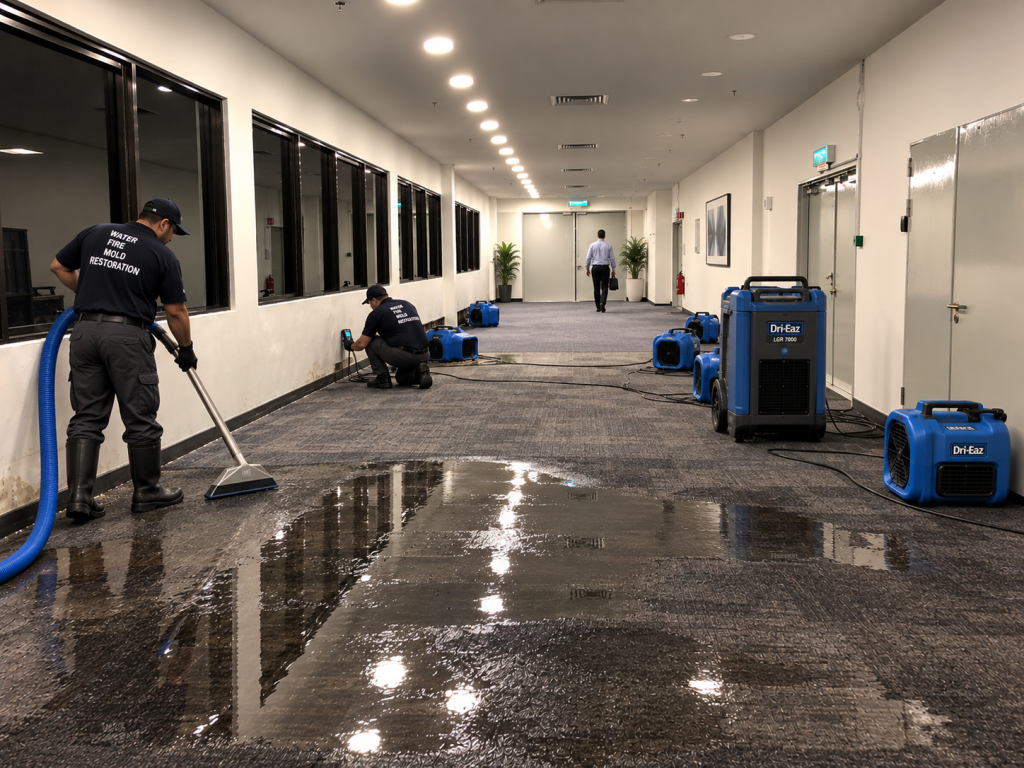
A single-tenant building has one decision-maker. A multi-tenant property may have twenty. As a result, every step takes more coordination. For example, crews need access to each suite. Tenants want updates. Insurers may send several adjusters. In addition, shared systems like fire alarms, elevators, and HVAC serve everyone at once. So multi-tenant flood cleanup needs a plan that covers both the building and each tenant.
Texas Flood Risks to Plan For
Texas sees floods from many sources. Hurricanes and tropical storms push rain and surge along the Gulf Coast. Central Texas flash floods can fill parking lots and ground-floor suites in minutes. Heavy thunderstorms in North Texas can overwhelm drains. Even West Texas sees sudden downpours. So every region needs a plan, not just the coast.
Choosing a Partner for Multi-Tenant Flood Cleanup
Pick your contractor before storm season. A large property needs a team with enough crews, pumps, and dryers to work many suites at once. Ask how many technicians they can send in the first day. Also ask if they have handled shopping centers or office parks before. In addition, confirm they hold commercial coverage and employ certified staff. A good partner for multi-tenant flood cleanup will also offer one project manager who talks to you and your tenants. That single point of contact saves hours each day.
Step 1: Build a Pre-Flood Plan
The best time to plan is before the water arrives. A strong plan includes:
- A contact list for every tenant, with after-hours numbers
- Maps of shutoffs for water, gas, and power
- Locations of electrical rooms, elevator pits, and fire panels
- A pre-selected restoration contractor
- Copies of leases that show who handles what after damage
- Photos of each suite in good condition
Keep the plan in print and in the cloud, since power and internet may fail during a storm.
Step 2: Secure the Building First
When water arrives, start with life safety and the building systems. First, shut off power to flooded areas. Next, check elevator pits and electrical rooms. Then protect fire alarm and sprinkler panels. These shared systems affect every tenant. So getting them stable is the landlord’s first job in multi-tenant flood cleanup.
Step 3: Triage Every Suite
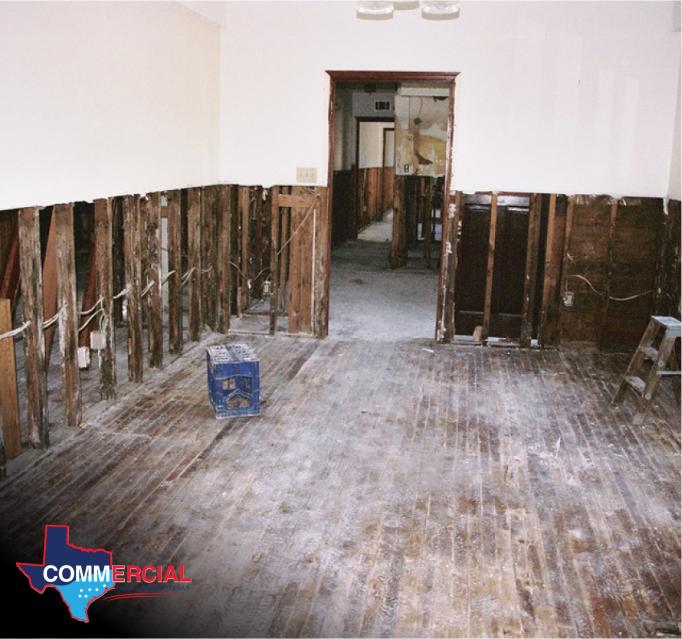
Next, walk every suite with the restoration team. Rank each one by damage and urgency. For example, a medical office with patient records may need help first. A storage-heavy tenant may need inventory moved right away. Meanwhile, a lightly damaged suite may wait a day. Record each suite’s condition with photos and notes. Then share the triage plan with tenants, so they know when crews will arrive.
Multi-Tenant Flood Cleanup and Shared Spaces
Corridors, lobbies, restrooms, and stairwells belong to everyone. So the landlord usually handles them. Clean and dry shared spaces early, because tenants and crews need safe routes. In addition, floodwater is contaminated, so crews must sanitize every common surface. Our post on flood cleanup stages explains the process in detail.
Step 4: Clarify Who Pays for What
Leases often split responsibility. Typically, the landlord covers the structure, roof, and shared systems. Meanwhile, tenants cover their own improvements, furniture, inventory, and lost income. However, every lease is different. So review the leases early and share a simple summary with tenants. Clear roles prevent disputes and speed up insurance claims.
Step 5: Coordinate Insurance Adjusters
Several insurers may be involved. The landlord’s carrier covers the building. Each tenant’s carrier covers their contents and business income. Flood damage may also fall under separate flood policies. So schedule joint walk-throughs where possible. Share photos and moisture readings with every adjuster. As a result, claims move faster and with fewer arguments.
Step 6: Phase the Multi-Tenant Flood Cleanup Work
Not every suite can be worked on at once. So phase the job. Start with shared spaces and the most damaged suites. Then move through the building in a set order. Drying usually takes several days. After drying, rebuild walls, floors, and finishes in each suite. Some tenants may hire their own contractors for interior work. If so, coordinate schedules carefully.

Communication During Multi-Tenant Flood Cleanup
Tenants want to know three things: when crews will arrive, when they can reopen, and who to call. So send a short update every day. Use email, text, and signs at entrances. Name one contact person for tenant questions. Meanwhile, keep a log of every tenant request and how it was resolved. Good communication reduces stress and protects relationships.
Health and Safety
Floodwater carries bacteria and chemicals. So keep tenants out of wet areas until crews clean and sanitize them. Watch for mold if drying is slow. In addition, check that fire exits stay open and lit during the work. The OSHA flood guidance lists common hazards after floods.
Finishing Multi-Tenant Flood Cleanup Suite by Suite
Each suite should reopen only when it is dry, clean, and safe. Check moisture readings, electrical inspections, and fire system tests. Then walk the suite with the tenant. Some suites may reopen in days, while others take weeks. A clear checklist keeps the process fair and consistent.
Retail, Office, and Mixed-Use Differences
Each property type has its own needs. Retail tenants lose sales every day they are closed, so speed matters most. Office tenants may move staff to remote work, which buys some time. Mixed-use buildings add apartments, so residents need safe exits and clean air. Because of this, your plan should rank tenants by how badly a closure hurts them. Then crews can go where they help the most.
Records That Support Multi-Tenant Flood Cleanup Claims
Good records protect everyone. Take photos of every suite before crews touch it. Log moisture readings each day. Keep a list of items thrown away, with tenant sign-off. Also save invoices for pumps, dryers, and labor by suite. As a result, each insurer sees exactly what work served its policy holder. Clear records make multi-tenant flood cleanup claims faster and fairer for all parties.
Common Mistakes to Avoid
- Waiting until a flood to build a tenant contact list
- Skipping shared systems while focusing on suites
- Letting tenants start rebuilds before drying is done
- Failing to share lease responsibilities early
- Poor communication that leaves tenants guessing
FAQ on Multi-Tenant Flood Cleanup
Who pays for multi-tenant flood cleanup?
Usually the landlord covers the building and shared spaces, while tenants cover their own contents and improvements. Check each lease.
Can some tenants reopen before others?
Yes. Phased cleanup lets dry, safe suites reopen first.
Should every tenant use the same contractor?
It often helps, but some tenants may choose their own. Coordination is key.
Prepare Your Property Now
A clear plan protects your building and your tenants. Visit our property manager resources, or contact our flood team today.
