

Commercial flood cleanup starts the moment the water stops rising. By then, mud may cover the floors, water may soak the walls, and stock may already be lost. The goal is to move from that mess to a clean, dry building as quickly and safely as possible. That path has clear stages: safety, water removal, debris and mud cleanup, sanitizing, tear-out, and structural drying. Skipping a stage or doing it out of order can lead to mold, odors, and failed repairs. This guide walks through each one in plain terms.
Business owners, property managers, and facility teams can use it to understand what crews are doing and why.
Why Floodwater Is Different
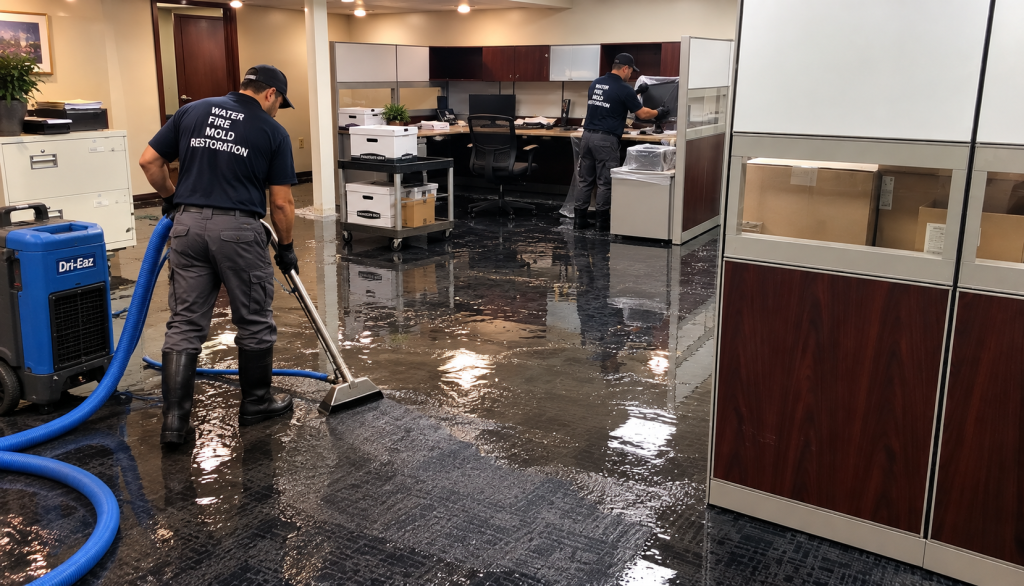
Not all water damage is the same. A burst supply pipe usually releases clean water. Floodwater, by contrast, comes from outside. It flows over streets, parking lots, and fields before it enters the building. Along the way, it picks up soil, oil, chemicals, and sewage.
Because of this, the industry treats floodwater as heavily contaminated. That changes the whole cleanup. Crews remove more materials, wear more protective gear, and clean and sanitize every surface. In short, commercial flood cleanup demands more care than a typical leak.
Stage 1: Make the Building Safe
Safety comes first. Before anyone walks into a flooded building, check for these hazards:
- Live electrical wiring or equipment in or near water
- Gas leaks or damaged fuel lines
- Weak floors, sagging ceilings, or shifted walls
- Slippery mud and hidden debris
- Snakes, rodents, or insects pushed in by the flood
Shut off power at the main panel if it is safe to reach. Otherwise, call the utility. Workers should wear boots, gloves, eye protection, and masks. The OSHA flood guidance lists the main hazards in detail.
Stage 2: Remove Standing Water
Next, crews pump out standing water. For deep water, they use submersible pumps. Once the level drops, they switch to extractors and squeegees. Speed matters here, because every hour of standing water pushes moisture deeper into walls and floors.
In some cases, water outside the building is still high. If so, crews should wait or pump slowly. Pumping a basement too fast while the ground is still soaked can crack foundation walls.
Stage 3: Clear Mud and Debris
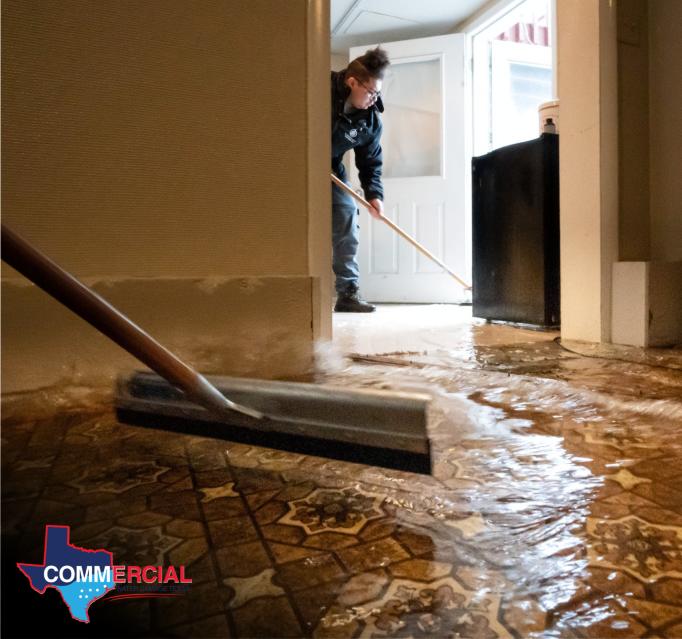
Floods leave behind mud, silt, and trash. Crews shovel and squeegee mud out while it is still wet, since dried mud is much harder to remove. They also haul away ruined furniture, boxes, and debris. Before anything goes in the dumpster, though, take photos for your insurance claim.
Mud gets everywhere. It settles in floor drains, ductwork, electrical boxes, and wall cavities. So crews check these hidden spots carefully during commercial flood cleanup.
Stage 4: Tear Out Contaminated Materials
Crews usually cannot save porous materials that touched floodwater. These include carpet and pad, drywall, insulation, ceiling tiles, and particleboard furniture. Crews typically make a flood cut, removing drywall a foot or two above the water line. That way, they reach all of the wet material and open the wall for drying.
Non-porous items, such as metal shelving, sealed concrete, and some hard furniture, can often be cleaned and kept. As a rule, if it soaks up water, it probably goes. If it sheds water, it can probably stay.
Stage 5: Clean and Sanitize
After tear-out, every remaining surface needs cleaning. Crews scrub floors, wall framing, and fixtures with detergent and water. Then they apply an antimicrobial treatment to kill bacteria and slow mold growth. This step is critical, because floodwater can leave germs behind even after surfaces look clean.
Industry standards from the IICRC guide how crews handle contaminated water and which materials must be removed.
Stage 6: Structural Drying After Commercial Flood Cleanup
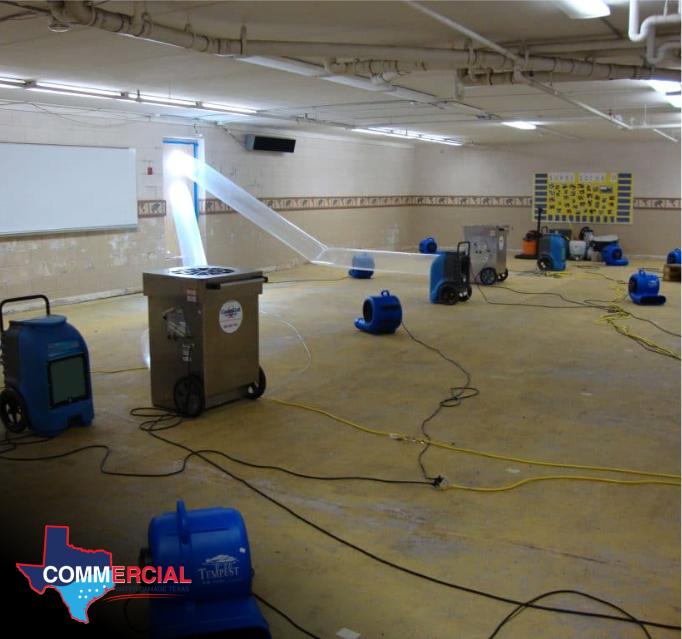
Now the building is ready to dry. Crews place air movers to blow air across wall framing, subfloors, and slabs. Dehumidifiers then capture the moisture that the moving air releases. For big open areas, crews sometimes add desiccant units or portable heaters to speed things up.
Technicians check moisture readings daily. Then they adjust equipment as areas dry. Drying usually takes three to seven days after a flood, depending on the materials and the weather. Our flood restoration services page explains the equipment in more depth.
Stage 7: Confirm the Building Is Dry
A building is only dry when the numbers say so. Technicians check wet spots against unaffected reference points in the same building. Once wood framing, drywall edges, and concrete reach normal levels, the equipment comes out. Rebuilding before this point traps moisture inside new walls, which leads to mold and odors later.
Commercial Flood Cleanup for Electrical and HVAC Systems
Floodwater does not stop at floors and walls. It also reaches outlets, panels, ductwork, and rooftop or ground-level HVAC units. So these systems need special attention. First, keep power off to any circuit that went underwater. Next, have a licensed electrician inspect panels, outlets, and wiring before anyone turns them back on. In many cases, outlets and breakers that sat in floodwater must be replaced.
HVAC systems need care too. Ductwork that held floodwater can spread odors and germs through the building. Therefore, crews often clean or replace low ducts and filters. Ground-level condensers and air handlers may need professional service as well. Planning these checks early keeps commercial flood cleanup moving and protects people once the building reopens.
Common Commercial Flood Cleanup Mistakes
- Entering the building before checking for electrical hazards
- Letting mud dry before removing it
- Trying to save soaked drywall and insulation
- Skipping the sanitizing step
- Rebuilding before moisture readings confirm dry conditions
- Throwing out damaged items before the adjuster sees them
Another common mistake is turning the building’s air conditioning off to save power. In fact, running it during drying often helps pull humidity out of the air, as long as the ducts stayed dry. Each of these mistakes can add cost and delay. Some, like skipping sanitizing, can also create health risks for staff and customers.
Commercial Flood Cleanup and Insurance
Flood damage is often covered differently than other water damage. Many standard commercial property policies exclude flood, so it may require a separate flood policy. Check your coverage early. Then document everything with photos, videos, and inventory lists. Keep receipts for cleanup, equipment, and temporary space as well.
How Long Commercial Flood Cleanup Takes
For a typical office or retail space, removal and tear-out take one to three days. Drying takes another three to seven days. Repairs come after that. Larger buildings, or those with deep flooding, can take several weeks. Still, starting fast is the best way to shorten the timeline.
FAQ on Commercial Flood Cleanup
Can we clean up a flood ourselves?
Small, shallow floods may be manageable. However, floodwater is contaminated, so professional crews and gear are safer for most commercial spaces.
How soon should commercial flood cleanup begin?
As soon as the building is safe to enter. Mold can start within a day or two.
Will we lose all our drywall?
Usually only the lower section that touched water, plus a margin above it. Upper walls can stay if moisture readings show they are dry.
Start Cleanup Today
The sooner cleanup starts, the more you save. Visit our flood damage services page, or contact our flood team now.
