
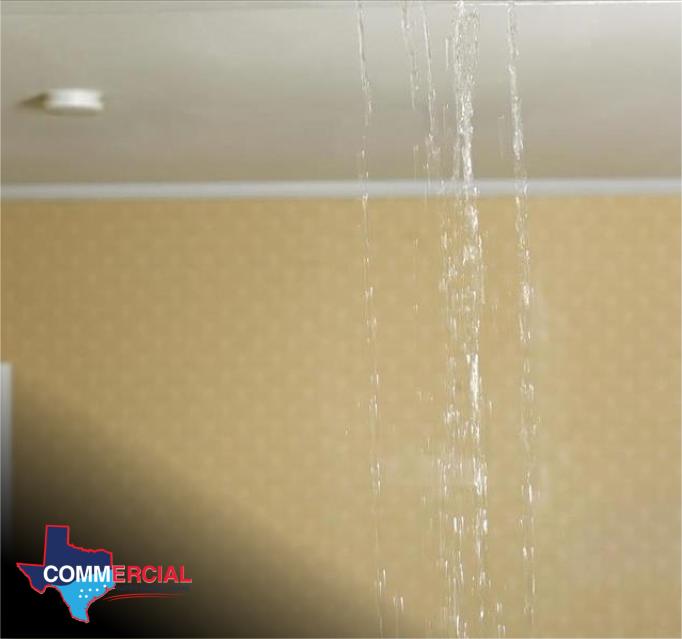
Fire sprinkler leak detection is one of those tasks no one thinks about until water starts dripping from the ceiling. A commercial sprinkler system holds water under pressure in pipes that run above offices, stores, warehouses, and hallways. When a fitting loosens, a pipe corrodes, or a head cracks, that water has only one place to go: down. Small leaks can soak ceilings and walls for weeks before anyone notices. Larger failures can release hundreds of gallons in minutes. This guide explains the warning signs, who to call first, how professionals find leaks, and how to limit the damage.
Facility managers, building engineers, and business owners can use it to respond fast and protect both the building and its fire protection.
How Commercial Sprinkler Systems Work
Most commercial buildings use one of two main types of sprinkler systems. Wet pipe systems keep water in the pipes at all times, so heads spray as soon as heat triggers them. Dry pipe systems, on the other hand, hold pressurized air in the pipes and only fill with water when a valve trips. Builders often use dry systems in unheated spaces where pipes could freeze.
Both types can leak. However, the causes and warning signs differ, so knowing your system type helps with fire sprinkler leak detection.
Common Causes of Sprinkler Leaks
- Corrosion: Steel pipes rust from the inside, especially in dry systems that trap moisture.
- Freezing: Pipes in cold attics, garages, or loading docks can burst during freezes.
- Physical damage: Forklifts, ladders, or stacked stock can hit heads and pipes.
- Loose fittings: Building movement and pressure changes can loosen joints over time.
- Faulty heads: Old or damaged heads can crack or start dripping.
- High pressure: Pressure surges can stress older parts of the system.
Texas buildings faced many of these failures during the February 2021 winter storm, when long freezes burst sprinkler lines across the state.
Fire Sprinkler Leak Detection: Warning Signs
Many sprinkler leaks start small. Watch for these signs:
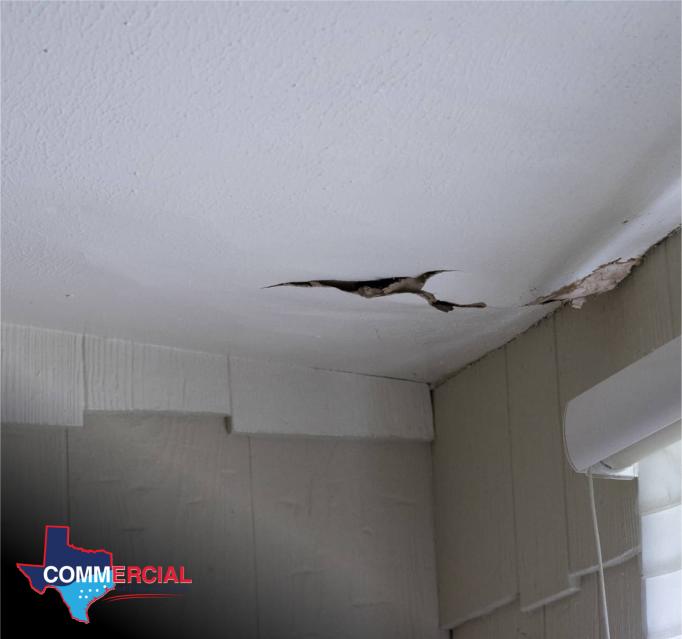
- Water stains or bubbles on ceiling tiles
- Drips near sprinkler heads or along pipe runs
- Rust or green residue on pipes and fittings
- Musty smells above the ceiling
- Pressure drops on system gauges
- Frequent air compressor cycling on dry systems
- Unexplained water on floors or in light fixtures
If you see any of these, act quickly. A small drip today can become a burst pipe tomorrow.
Who to Call First
The right calls depend on how bad the leak is.
For an Active Leak or Burst Pipe
- Call your fire alarm monitoring company. Tell them you have a leak and may need to shut the system down.
- Call the fire department if needed. Many departments will come out to help shut down a flowing system.
- Call a licensed fire sprinkler contractor. They repair the pipe or head and restore the system.
- Call a water damage restoration company. They remove water and dry the building.
Shutting down a sprinkler system leaves the building without fire protection. So most fire codes and insurers require a fire watch, with trained staff patrolling the building, until the system returns to service.
For a Slow Leak
For drips and stains, call a licensed sprinkler contractor to inspect the system. Then schedule a restoration company to check for hidden moisture in ceilings and walls. In Texas, the State Fire Marshal’s Office licenses fire sprinkler contractors. The Texas State Fire Marshal’s Office lets you verify a company’s license.
How Fire Sprinkler Leak Detection Works
Professionals use several tools to find leaks:
- Visual inspection: Technicians check heads, pipes, and fittings for drips, rust, and residue.
- Pressure testing: They isolate zones and watch for pressure loss.
- Thermal imaging: Cameras show cool, wet areas in ceilings and walls.
- Moisture meters: Meters confirm wet drywall, ceiling tiles, and framing.
- Acoustic detection: Sensitive listening tools can pick up the sound of escaping water or air.
Together, these methods pinpoint the leak and show how far the water spread. Our sprinkler leak services page explains how we combine them.
Cleanup After Fire Sprinkler Leak Detection
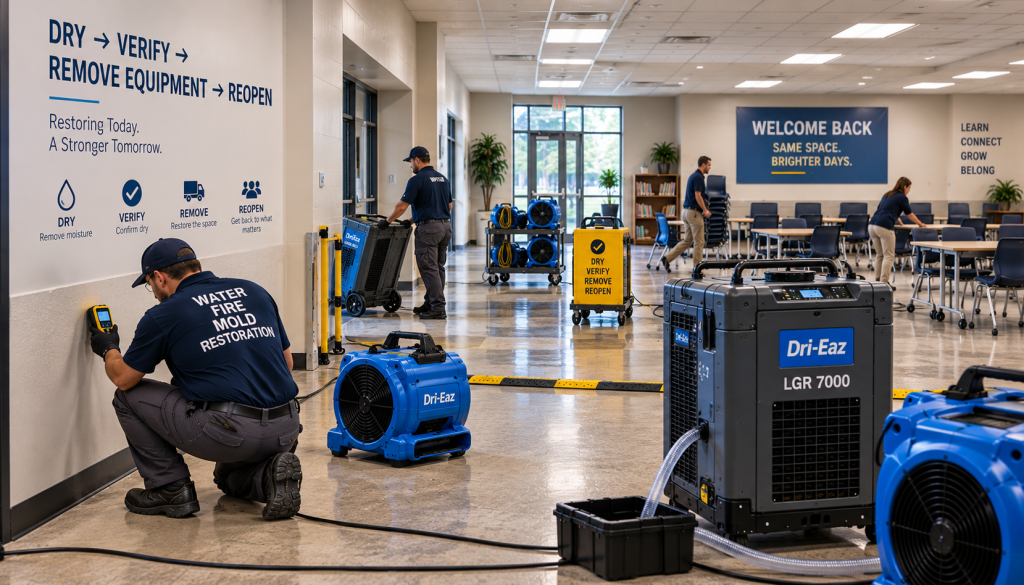
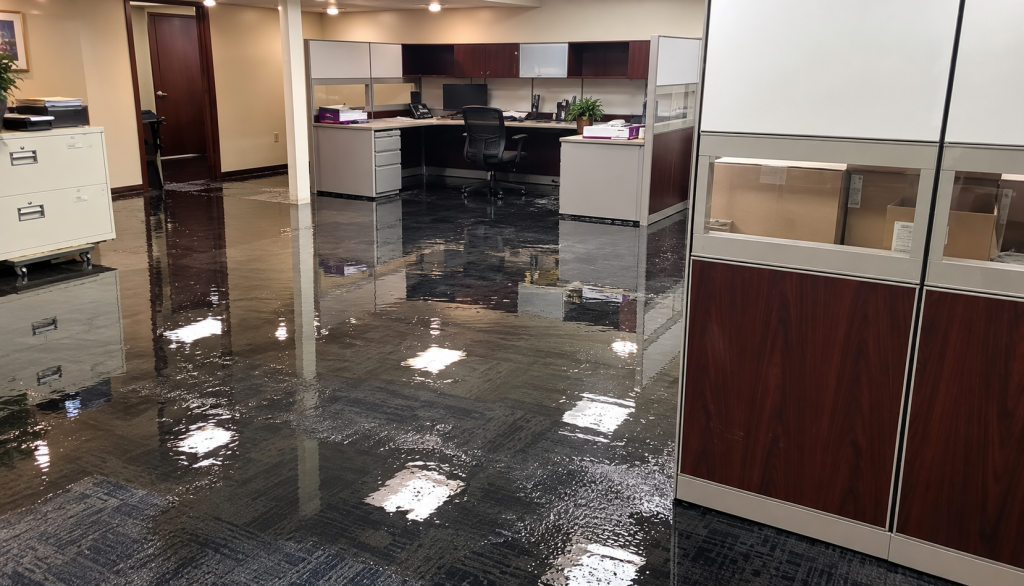
Once the leak is fixed, cleanup begins. Sprinkler water is often dark and smelly, because it sits in pipes for years. As a result, crews treat it with care. They remove wet ceiling tiles and insulation, extract water from floors, and dry walls and carpets. They also clean and sanitize surfaces that the dirty water touched.
Moisture mapping guides the drying. Technicians check readings daily until every area reaches normal levels.
Fire Sprinkler Leak Detection and Maintenance
Regular inspections prevent many leaks. Fire codes based on NFPA standards call for routine inspection, testing, and maintenance of sprinkler systems. During these visits, contractors check gauges, valves, heads, and pipes. They can spot corrosion, loose fittings, and damaged heads before they fail.
Between inspections, train staff to report stains, drips, and odd sounds right away. A simple reporting habit often catches leaks weeks before they cause real damage. Also protect heads in storage areas with guards, and keep stock well below the heads.
When to Schedule Fire Sprinkler Leak Detection
You do not have to wait for a drip to call for help. In fact, several moments call for a proactive check. For example, schedule fire sprinkler leak detection after any hard freeze, after a tenant build-out that moved ceiling work around the pipes, or after a forklift or ladder strikes a line. Older buildings with original steel pipe also benefit from regular checks, since internal corrosion can be hard to see.
Dry pipe systems deserve special attention. If the air compressor runs more often than usual, the system may be losing air through a small leak. Similarly, a rising number of trip tests or pressure alarms can point to trouble. Catching these signs early through fire sprinkler leak detection costs far less than cleaning up after a burst pipe.
Preparing for Freezes
Texas freezes are rare but serious. Before cold weather, check heat in areas with sprinkler pipes. Insulate pipes near exterior walls and loading docks. For dry systems, make sure drains are clear of water. These steps can prevent the kind of widespread failures seen in 2021.
Insurance and Documentation
Sudden sprinkler leaks are often covered by commercial property policies. However, damage from long-term leaks or poor maintenance may not be. So document the leak, the repair, and the cleanup with photos and invoices. Keep inspection records on file too, since they show the system received proper care.
FAQ on Fire Sprinkler Leak Detection
Who should I call first for a sprinkler leak?
For an active leak, call your fire alarm company and, if needed, the fire department. Then call a licensed sprinkler contractor and a restoration company.
Can I shut off the sprinkler system myself?
Only if you are trained and have notified the alarm company. Otherwise, wait for the fire department or a licensed contractor.
How long does fire sprinkler leak detection take?
Simple leaks may take an hour to find. Hidden leaks in large buildings can take longer, especially when pipes run above hard ceilings or inside walls.
Act Fast When Sprinklers Leak
Quick action protects your building and keeps fire protection in place. Visit our sprinkler leak help page, or call our team right away.
