
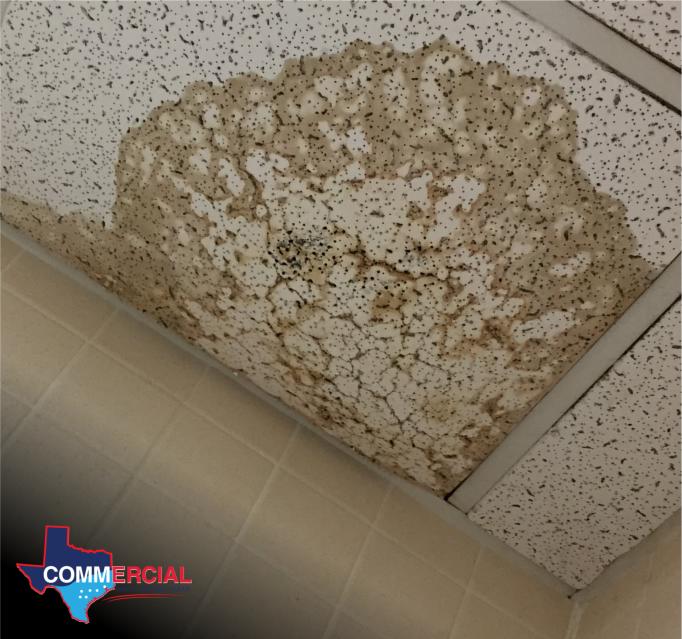
Austin storm damage restoration often begins with a phone call in the middle of a downpour. A spring storm drops hail on a flat roof, wind lifts the edge of the membrane, and rain pours through ceiling tiles into offices, stores, and warehouses below. At the same time, flash flooding may push water through doors and into ground-floor suites. Business owners suddenly face two problems at once: stopping more water from getting in, and cleaning up the water that already did. This guide explains how to handle both, step by step.
Owners, property managers, and facility teams across Austin and Central Texas can use it to act quickly and avoid costly mistakes.
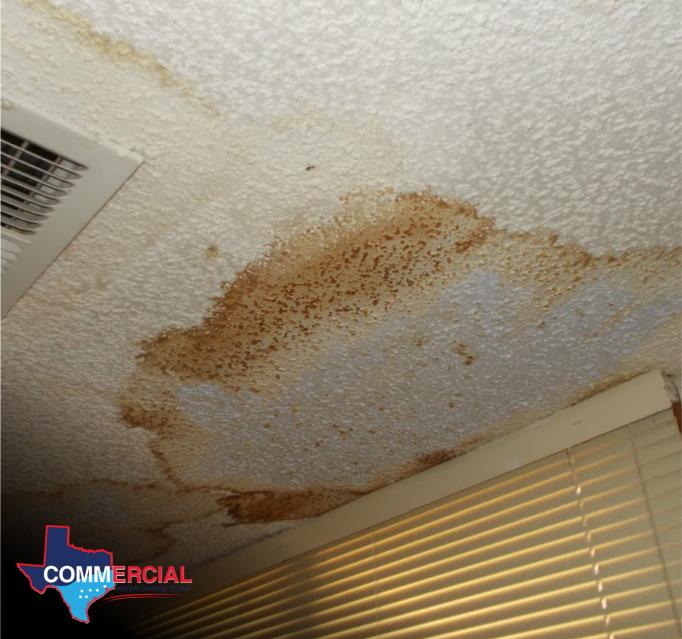
How Central Texas Storms Damage Buildings
Central Texas storms hit hard and fast. In spring and early summer, strong thunderstorms bring hail, high winds, and heavy rain. In some years, tropical systems from the Gulf add days of rain. Here is how that weather damages commercial buildings:
- Hail punctures roof membranes, cracks skylights, and dents rooftop units.
- Wind peels back roof edges, flashing, and loose equipment.
- Heavy rain overwhelms roof drains and finds every weak seam.
- Flash floods push muddy water into lobbies, garages, and lower floors.
Because one storm can do all four, Austin storm damage restoration must cover both the roof and the interior.
Step 1: Check for Safety Hazards
First, keep people safe. Sagging ceilings can collapse without warning when they fill with water. So clear people out from under them. Then cut power to wet areas, especially where water drips near light fixtures or outlets. Watch for downed power lines outside. If you smell gas, leave the building and call the utility.
Step 2: Stop the Water From the Roof
Next, stop more water from coming in. A roofing or restoration crew can tarp damaged areas, seal punctures, and clear clogged roof drains. This emergency work is often called “dry-in.” It does not replace a full roof repair, but it buys time to clean up inside.
Commercial policies generally expect you to limit further harm once you know about a loss. So quick tarping also protects your claim. Inside, place buckets and plastic sheeting under active leaks until the roof is secure.
Step 3: Document the Storm Damage
Before anyone starts cleaning, record the scene with photos and video. Capture the roof, the ceiling damage, water on floors, and affected contents. Write down when the storm hit, down to the hour if you can. Records from the NWS forecast office for Central Texas can help confirm hail or wind on that date.
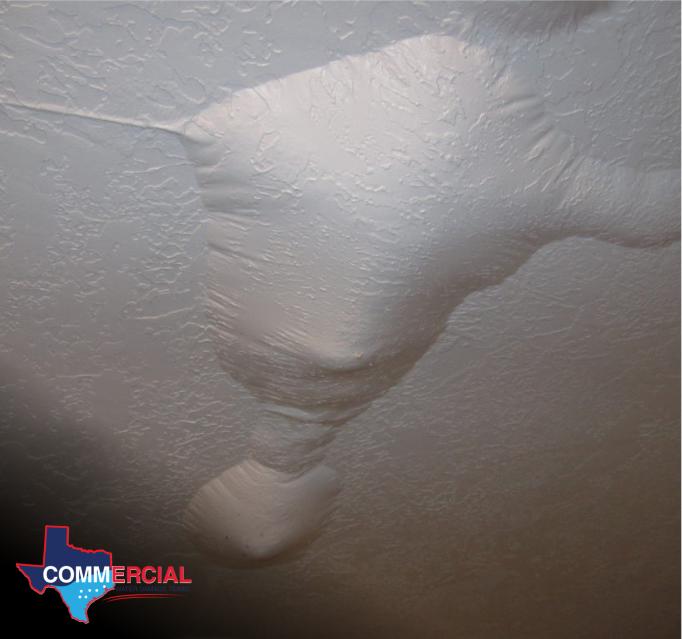
Step 4: Austin Storm Damage Restoration Starts With Water Removal
Then crews remove standing water with extractors and squeegees. They also take down wet ceiling tiles, which usually cannot be saved once they sag or stain. Above the ceiling, insulation may be soaked as well. Crews remove it so the cavity can dry.
If floodwater entered from outside, the job changes. Floodwater carries mud, sewage, and chemicals. So crews treat it as contaminated, remove porous materials it touched, and sanitize every surface.
Step 5: Find Hidden Moisture
Roof leaks rarely show up where they start. Instead, water may follow the roof deck, run down beams, and soak the inside of walls far from the visible drip. Technicians use moisture meters and thermal cameras to trace that path. Then they mark every wet area on a floor plan. As a result, the drying plan covers the whole problem, not just the obvious stains.
Step 6: Drying During Austin Storm Damage Restoration
Next, crews set up air movers and dehumidifiers. Central Texas humidity can slow drying after a storm, so dehumidifiers play a big role. Technicians check readings every day and move equipment as areas dry. Most commercial spaces dry in three to five days, though wet insulation and wood framing may take longer. Our drying and restoration page explains the process.
Austin Storm Damage Restoration for Rooftop Equipment
Rooftop air conditioners, vent fans, and solar arrays often take a beating from hail and wind. Bent condenser fins reduce cooling, and shifted units can open new leak paths around curbs. So have a mechanical contractor inspect rooftop equipment after any major storm. Fixing these issues early prevents slow leaks that keep soaking ceilings for weeks.
Austin Storm Damage Restoration for Ground-Floor Flooding
Roof leaks are only half the story in many Central Texas storms. Heavy rain can also overwhelm parking lot drains and push muddy water under doors. Ground-floor suites, lobbies, and underground garages take the worst of it. In these cases, Austin storm damage restoration includes flood cleanup as well as roof work.
First, crews pump out standing water and remove mud while it is still wet. Next, they remove the lower section of wet drywall, along with soaked carpet and pad, so the wall cavities can breathe. Then they clean and sanitize every surface the floodwater touched. Finally, drying equipment runs until readings return to normal. Because floodwater is dirty, this part of Austin storm damage restoration usually involves more tear-out than a clean roof leak.
Step 7: Permanent Roof Repairs
Tarps are temporary. Once the weather clears, a commercial roofer should inspect the full roof and make lasting repairs or recommend replacement. Ideally, roof work finishes before interior rebuilding starts. That way, new ceilings and finishes stay dry.
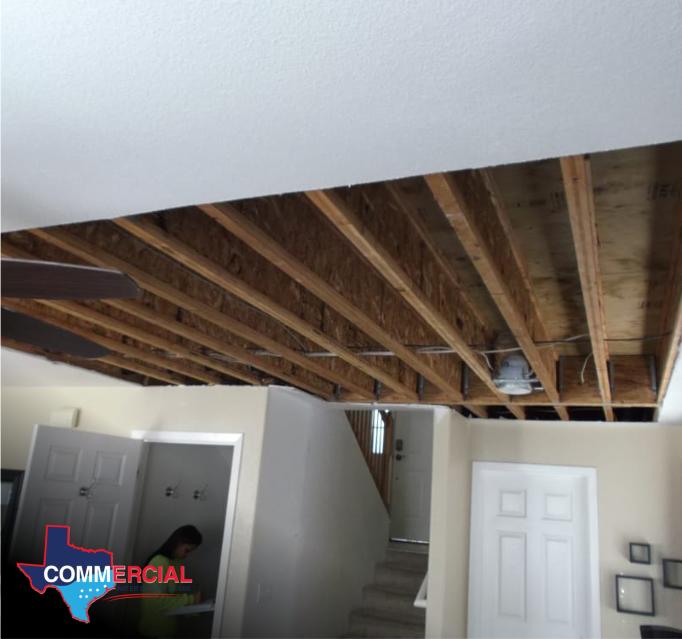
Step 8: Rebuild the Interior
After drying and roof repairs, crews rebuild. They install new insulation, drywall, ceiling tiles, and flooring. Electrical or structural work may need permits from the city. Finally, the team cleans the space so staff and customers can return.
Austin Storm Damage Restoration and Insurance
Storm claims can be complex. Wind and hail damage are usually covered under commercial property policies. However, flood damage from rising water often requires a separate flood policy. So review your coverage early. Keep receipts for tarping, water removal, and temporary repairs. Also track lost income if your business must close.
Also save the tarping invoice and any photos the roofer takes, since they show you acted quickly to prevent more damage. After a big Austin storm, adjusters may be very busy. Good photos and clear records help speed up your inspection and approval.
Watch Out for Storm Chasers
After major hail events, out-of-town contractors often flood the area. Some do good work, but others take deposits and disappear. So verify any company that knocks on your door. Check local references, proof of insurance, and a physical address in Texas. Our post on hiring restoration companies offers a simple checklist.
Preparing for the Next Storm Season
- Inspect roofs and clear drains before spring storm season.
- Secure loose rooftop equipment.
- Keep a tarp and emergency supplies on site.
- Know where shutoffs and main breakers are.
- Choose a restoration partner in advance.
FAQ on Austin Storm Damage Restoration
How fast should Austin storm damage restoration start?
As soon as the site is safe. Tarping and water removal should begin within hours, before ceilings and walls absorb more water.
Is hail damage covered by insurance?
Usually, yes, under commercial property policies. Flood damage often needs separate coverage.
Can we stay open during repairs?
Often, yes. Crews can close only affected areas and work after hours.
Recover Faster After the Storm
Acting fast after a storm saves money and shortens downtime. Visit our storm and flood services page, or call our Austin team now.
