
Texas water damage restoration is a different job than it is in most states. Here, a business can face a flash flood in spring, a hailstorm in summer, a hurricane band in fall, and frozen pipes in winter. Each event brings its own kind of water and its own kind of damage. Yet the restoration process follows the same core steps every time. When owners know those steps, they make faster decisions, avoid common mistakes, and reopen sooner. This guide explains what businesses should expect, from the moment you report the loss until the last coat of paint dries.
Owners, property managers, and facility teams across Texas can use it to prepare before a loss and to stay in control during one.
Why Texas Businesses Face Unique Water Risks
Texas weather is hard on buildings. Central Texas sits in an area often called Flash Flood Alley, where heavy rain can turn creeks into rivers within an hour. Meanwhile, North Texas sees frequent hail that cracks roofs and skylights. Along the Gulf Coast, tropical storms push wind-driven rain through walls and windows.
Cold snaps matter too. During the February 2021 winter storm, thousands of Texas businesses dealt with burst pipes in buildings that were never designed for long freezes. As a result, Texas water damage restoration crews must be ready for clean supply-line water, dirty floodwater, and everything in between.
What Happens When You First Call
The first call sets the tone for the whole project. A good restoration company will ask a few quick questions. What is the source? Is it still running? How large is the affected area? Are people or power systems at risk?
Based on your answers, they send a crew and the right equipment. In most Texas metros, a professional team should be able to arrive within a few hours. Before they get there, shut off the water source if you can do it safely, and keep people away from wet electrical gear.
The Initial Inspection
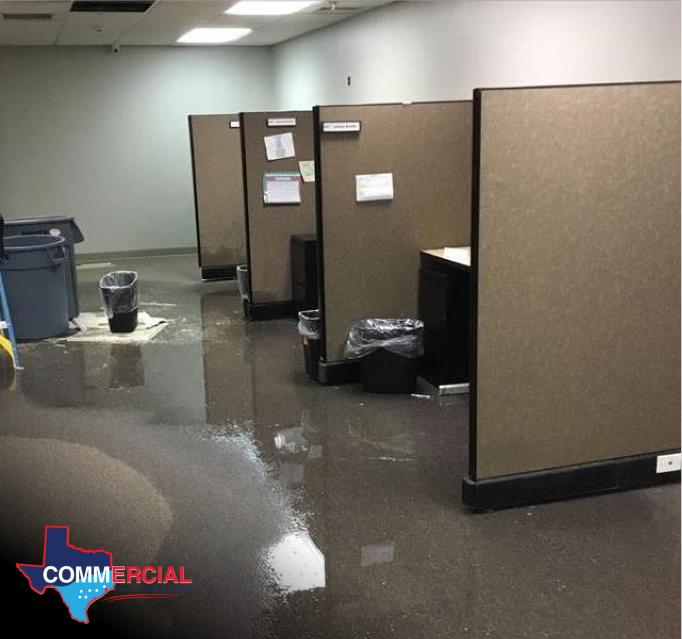
On arrival, the project lead walks the site. First, they check for hazards, such as sagging ceilings, live wiring, or slick floors. Next, they identify the water source and the type of water. Clean water from a supply line is handled differently than floodwater or sewage.
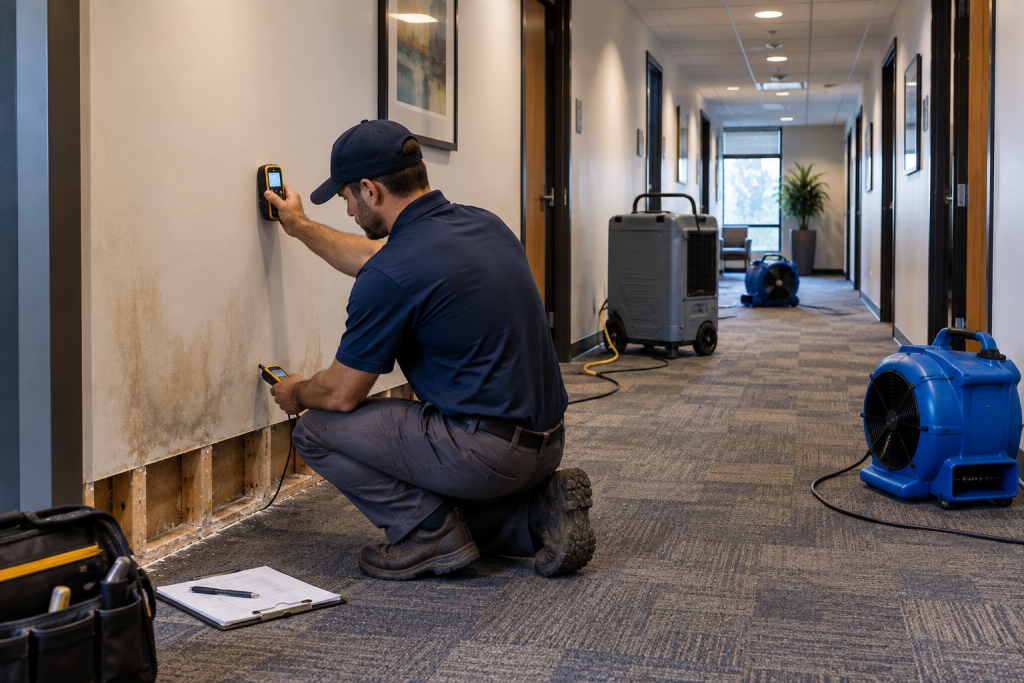
Then the team maps moisture with meters and thermal cameras. This step shows how far the water traveled, which is usually farther than it looks. Finally, they explain the plan, the timeline, and what you need to do next.
Water Removal and Extraction
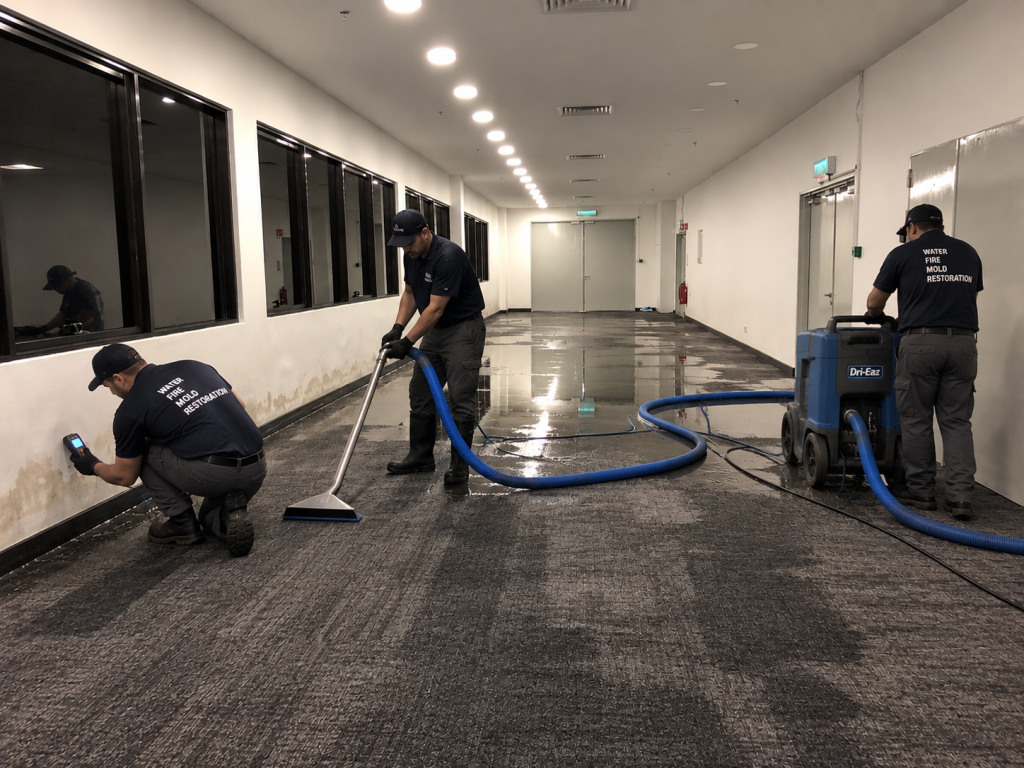
Next, crews remove standing water. On carpet, they use powerful extractors and weighted tools. On concrete or tile, they may use squeegees, pumps, and floor scrubbers. Fast removal limits how far the water spreads into walls, furniture, and stock.
In large Texas warehouses and big-box stores, this step can involve truck-mounted units and several crews working at once. Our building water removal page covers the equipment involved.
Texas Water Damage Restoration: Drying in a Humid Climate
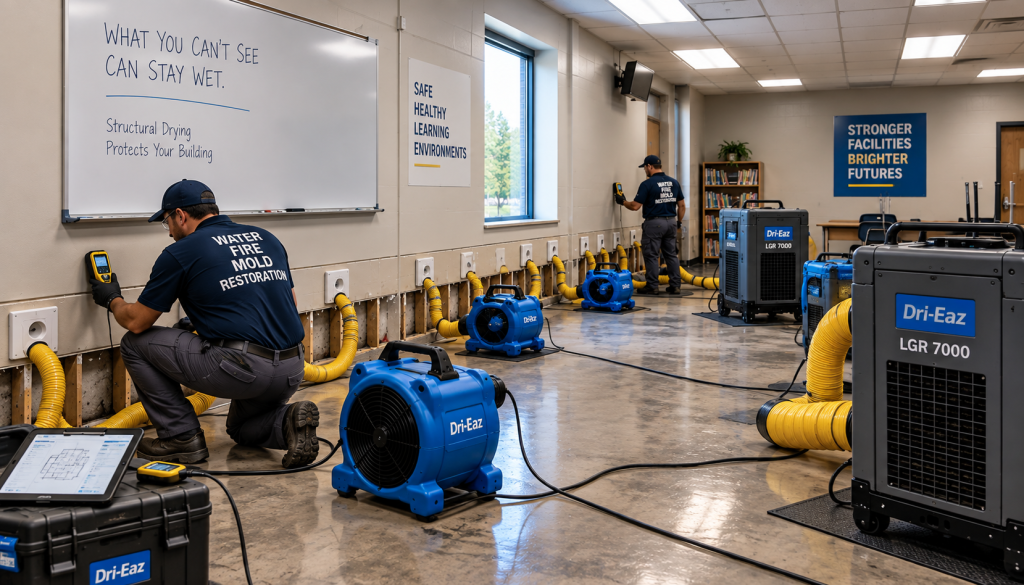
After extraction, drying begins. Crews place air movers along walls and floors and set up dehumidifiers to pull moisture from the air. In humid parts of Texas, such as Houston and the coast, dehumidifiers work extra hard. So crews may keep doors closed and run the building’s air conditioning to help.
Technicians check moisture readings every day. They move equipment as areas dry and remove it once materials reach their drying goals. Most commercial drying jobs take three to five days, though dense materials can take longer.
Texas Water Damage Restoration and Mold Prevention
Texas heat and humidity give mold a head start. Mold can begin to grow on wet materials within a day or two. That is why fast drying matters so much. If mold does appear, Texas law requires licensed professionals for many remediation jobs. The Texas Department of Licensing and Regulation oversees mold assessors and remediators in the state.
In practice, this means your restoration company should either hold the right license or work with a licensed partner. Ask about this early, especially if water sat for more than a day before cleanup began.
Removing Damaged Materials
Some materials cannot be saved. Wet carpet pad, swollen particleboard, soaked insulation, and drywall touched by floodwater usually come out. Crews often make a “flood cut,” removing the bottom two to four feet of drywall so walls can dry from the inside.
Good teams remove only what they must. They photograph each area first, so the insurance adjuster can see why each item came out.
Texas Water Damage Restoration and Your Insurance Claim
Insurance is a big part of Texas water damage restoration. Your restoration company should keep photos, moisture logs, equipment records, and a detailed scope of work. These records help adjusters approve the claim faster.
You should also keep your own records. Track lost income, extra expenses, and any temporary space you rent. Many commercial policies cover these costs, but only with proof. Our property manager resources page offers more tips.
Repairs and Reconstruction
Once the building is dry, repairs begin. The team installs new wallboard, insulation, floor coverings, ceiling panels, and baseboards. Larger projects may need permits from your city, along with inspections for electrical and fire systems. In many cases, the same company handles both restoration and rebuild, which saves time and reduces handoffs.
How Long Texas Water Damage Restoration Takes
Timelines vary with the size of the loss and the type of water. Here is a rough guide:
- Small clean-water leaks: Drying in three to five days, with light repairs afterward.
- Large office or retail losses: One to three weeks for drying and repairs.
- Floodwater or sewage: Several weeks, since more materials must come out.
- Major storm events: Longer, because contractors and materials are in high demand.
Regional Differences Across Texas
Texas is big, and each region brings its own challenges. In Houston and along the coast, high humidity slows drying, so crews often need extra dehumidifiers. In Dallas and Fort Worth, hail and roof leaks are common causes of commercial losses. Meanwhile, Austin and San Antonio see sudden flash floods that push muddy water into ground-floor suites. West Texas, on the other hand, deals with fewer floods but more freeze damage to exposed pipes. A good restoration partner adjusts the plan to match local conditions.
How to Prepare Before a Loss
- Know where your main water shutoff and electrical panels are.
- Keep a current list of emergency contacts.
- Store important stock and records off the floor.
- Insulate pipes in unheated areas before winter.
- Choose a restoration partner before you need one.
The National Weather Service Austin/San Antonio office also posts flood and freeze warnings that can give you time to prepare.
Choosing a Texas Water Damage Restoration Company
Look for a company with 24/7 response, IICRC-trained technicians, commercial experience, and solid insurance. Also ask how they communicate during the job. Daily updates, clear photos, and a single point of contact make a big difference when you are trying to run a business at the same time.
FAQ on Texas Water Damage Restoration
How fast should Texas water damage restoration start?
Ideally within a few hours. The longer water sits, the more damage and mold risk you face.
Does insurance cover water damage in Texas?
Most commercial policies cover sudden leaks. Flood damage usually needs separate flood coverage.
Can my business stay open?
Often, yes. Crews can isolate wet areas and work around your schedule.
Get Help Fast
When water hits your Texas business, a clear plan makes all the difference. Visit our restoration services page, or reach our 24/7 Texas team right now.
