
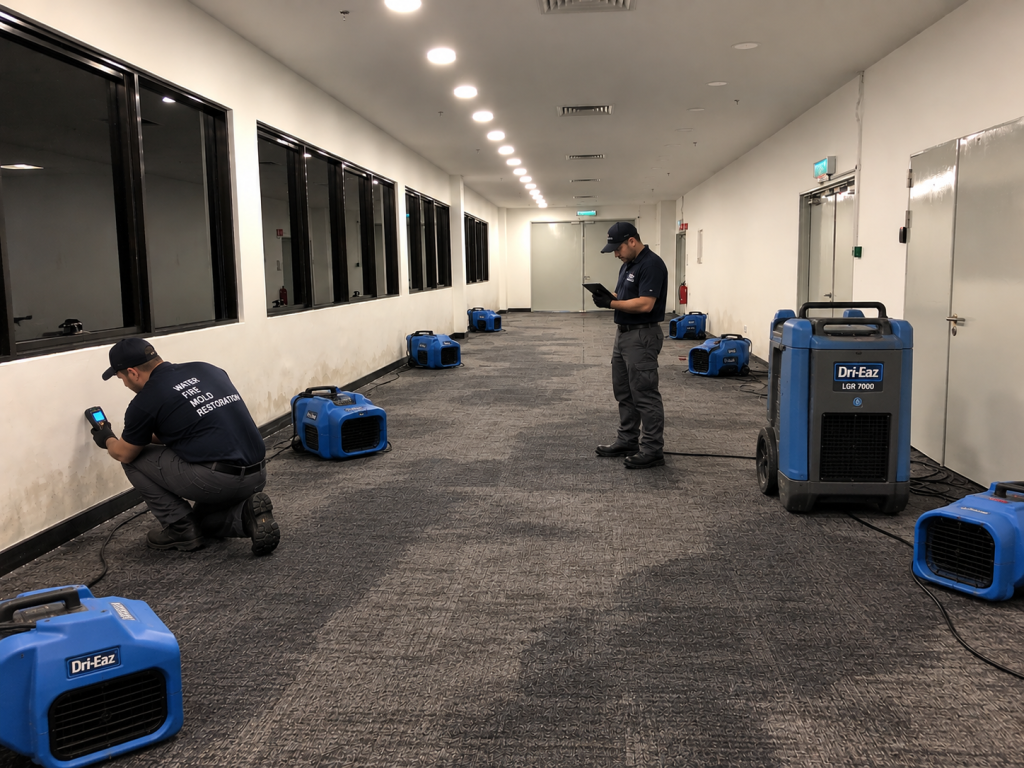
Dallas commercial water damage rarely arrives at a convenient time. A pipe bursts on a Friday night, a hailstorm cracks a roof during business hours, or a sprinkler head breaks just before a big tenant event. For property managers, the first hour sets the course for everything that follows. Quick, calm action can keep a small leak from turning into a building-wide loss. Slow or scattered action, on the other hand, can multiply the damage, the cost, and the tenant complaints. This guide lays out what to do first, in the order that matters most.
Property managers, building engineers, and asset managers across Dallas, Fort Worth, and the wider Metroplex can use it as a quick-start checklist.

Why the First Hour Matters
Water moves fast. In a single hour, it can spread across a floor, soak into drywall, and drip into suites below. In addition, it can reach elevator pits, electrical rooms, and data closets. Every minute you save in the first hour reduces the size of the job later.
The first hour also shapes the insurance claim. Clear photos, notes, and quick mitigation show the insurer that you acted responsibly. That record can make the difference between a smooth claim and a long dispute.
Common Causes of Dallas Commercial Water Damage
Knowing the usual causes helps you respond faster. In the Dallas area, these come up most often:
- Hail and wind: North Texas storms damage roofs, skylights, and rooftop units.
- Freezes: Hard freezes, like the 2021 winter storm, burst pipes in walls and ceilings.
- Fire sprinklers: Damaged heads, frozen lines, or accidental hits release large volumes.
- Plumbing failures: Supply lines, water heaters, and drains fail without warning.
- HVAC condensate: Clogged lines overflow, often above ceilings.
- Flash flooding: Heavy rain overwhelms drains and parking garages.
Step 1: Stop the Water
First, find and stop the source. Know where the main shutoff and the floor shutoffs are, and keep that information in your emergency plan. For sprinkler leaks, notify the fire alarm company and the fire department before you close a valve. After all, shutting down the system leaves the building without fire protection, and many insurers require a fire watch.
If the water comes from a roof, you may not be able to stop it right away. In that case, focus on catching the water and protecting what is below.
Step 2: Make the Area Safe
Next, protect people. Cut power to wet areas if you can do it safely. Then keep tenants and staff away from sagging ceilings, wet electrical gear, and slick floors. Use cones and signs to mark hazards. If water reached an elevator pit, take the elevator out of service until a technician checks it.
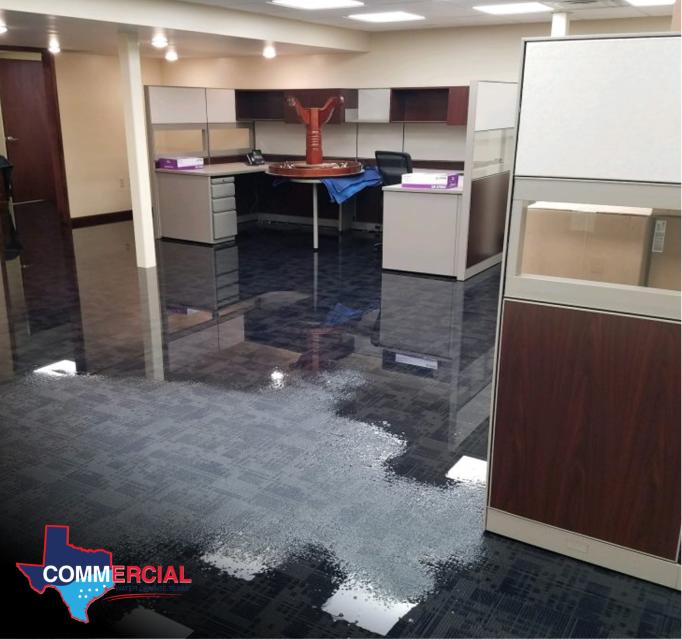
Step 3: Call a Dallas Commercial Water Damage Team
Now call a commercial restoration company. Ideally, you chose one before the loss and have their number in your plan. Tell them the source, the size of the area, and whether the water is clean or dirty. A professional Dallas-area team can usually reach you within a few hours, bringing extraction and drying equipment.
The sooner extraction starts, the smaller the job. Our emergency response page explains what happens once the crew arrives.
Step 4: Document Dallas Commercial Water Damage
Before anything moves, take photos and videos. Capture the source, the standing water, damaged ceilings, and affected contents. Write down the time you found the leak and the steps you took. Also save any broken parts, such as a failed supply line or a sprinkler head, because the insurer may want to inspect them.
Good records protect you. They support the insurance claim and help settle questions about who is responsible.
Step 5: Notify Tenants and Owners
Tell affected tenants quickly and clearly. Explain what happened, which areas are closed, and when you will share the next update. Also notify the building owner or asset manager, along with your insurance agent. Many leases set deadlines for notice, so check yours.
Clear, early updates reduce frustration. In fact, tenants often care more about good communication than about the leak itself.
Step 6: Protect Contents and Equipment
Move dry furniture, files, and electronics away from wet areas. Lift items off the floor if water is still spreading. Cover equipment below ceiling leaks with plastic sheeting. Then make a quick list of damaged items with photos. Tenants are usually responsible for their own contents, but your help in the first hour builds goodwill.
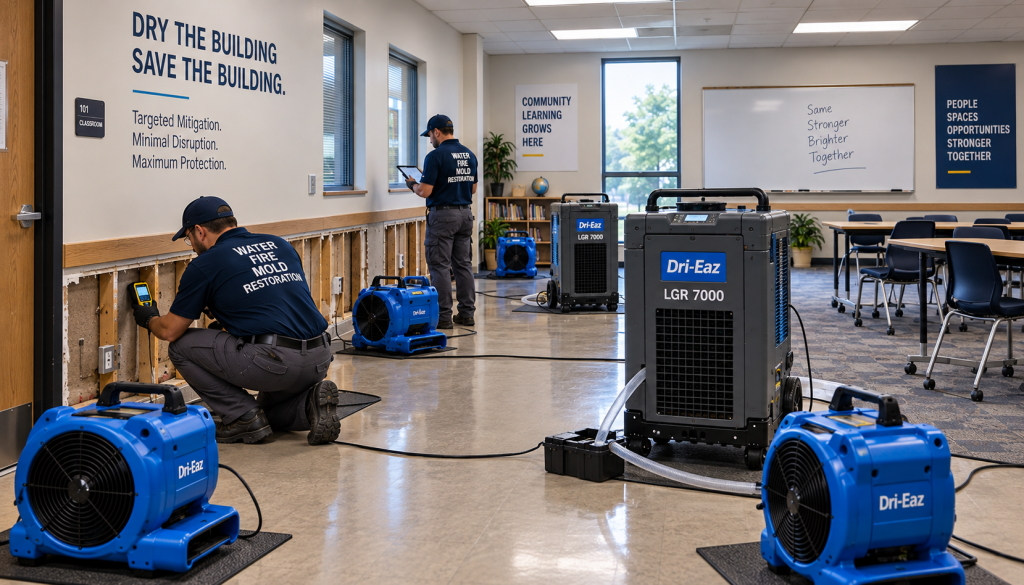
Step 7: Drying Out Dallas Commercial Water Damage
Once the water is out, drying begins. The restoration team places air movers and dehumidifiers and checks moisture readings every day. As a property manager, ask for a daily summary that shows progress and any problems. That summary helps you update tenants and owners.
Handling Dallas Commercial Water Damage in Multi-Tenant Buildings
In multi-tenant buildings, water rarely respects suite lines. A leak in one office may damage two others and the corridor. So coordinate access to every affected suite. Keep a log of who approved entry and when. Also clarify which costs fall to the building and which fall to tenants, based on the leases.
Mistakes to Avoid With Dallas Commercial Water Damage
Even experienced managers make a few common mistakes. First, some wait to see if a small leak gets worse. Unfortunately, that delay lets water soak deeper into walls and floors. Second, some try to dry large areas with box fans and shop vacuums. Those tools cannot reach water trapped inside drywall or under flooring.
Third, some managers discard ruined property before the insurance inspection. That can weaken the claim. Finally, some managers skip tenant updates because they do not have all the answers yet. In fact, a short update with partial information is far better than silence. Avoiding these mistakes keeps Dallas commercial water damage smaller, cheaper, and easier to manage. It also shows owners and tenants that the building is in good hands.
Insurance Basics for Property Managers
Most commercial property policies cover sudden water damage, such as burst pipes and sprinkler leaks. However, many exclude flood and long-term leaks. Report the loss promptly, share your documentation, and keep receipts for emergency services. If tenants must relocate, track those costs too. Our property manager resources offer more guidance.
Build Your Water Emergency Plan Now
- Map every shutoff valve and electrical panel.
- Post emergency contacts in engineering rooms.
- Pre-select a restoration partner with 24/7 response.
- Install leak sensors in risky areas like mechanical rooms.
- Train staff on what to do in the first hour.
- Review your insurance coverage once a year.
The National Weather Service Fort Worth office issues storm and freeze alerts that buy you valuable time.
FAQ on Dallas Commercial Water Damage
Who pays for Dallas commercial water damage repairs?
It depends on the cause and the lease. Often, the building policy covers the structure, while tenants cover their contents.
How fast should a restoration team arrive?
Within a few hours in most of the Metroplex. Ask about response times before you need them.
Should I shut off a leaking sprinkler myself?
Only if you know the system and have notified the fire alarm company. Otherwise, call the fire department.
Be Ready Before It Happens
A clear plan turns a crisis into a manageable event. Visit our Texas services page, or call our response team anytime.
