
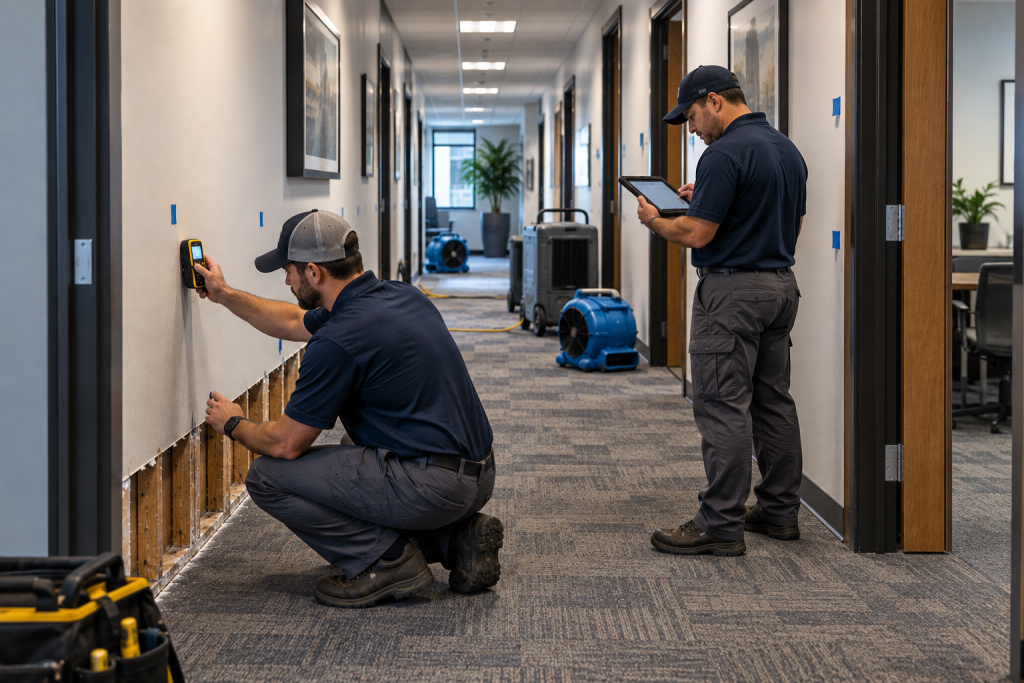
Austin water damage repair can mean replacing a few ceiling tiles in one suite, or rebuilding an entire floor of a downtown office tower. Two leaks that look alike on the first day often end with very different bills. Business owners naturally want to know why. Eight main factors explain the gap: where the water came from, the size of the wet area, the finishes and framing involved, any damaged building systems, the speed of the response, local code rules, and your insurance terms. Below, we walk through each one so your estimate makes sense and your recovery plan holds up.
Austin business owners, tenants, and building managers can use it to ask sharper questions and avoid surprises.
What a Scope of Work Includes
Put simply, the scope of work is a line-by-line list of every task needed to return the space to its pre-loss condition. It typically covers four groups of work:
- Mitigation: Water removal, tear-out, and drying.
- Cleaning: Sanitizing surfaces and handling contents.
- Repairs: Drywall, flooring, ceilings, paint, and trim.
- Specialty work: Electrical, HVAC, plumbing, and fire systems.
Ultimately, a clear scope protects everyone. You know what you are paying for, the contractor knows what to deliver, and the adjuster can match the work to the policy.
Factor 1: The Water Source
First, the source of the water drives many decisions. Restoration pros sort water into three categories. Category 1 is clean water, such as a broken supply line. Next, Category 2 covers gray water, such as overflow from a dishwasher or a washing machine. Finally, Category 3 means black water, such as sewage or outdoor floodwater.
In Austin water damage repair, as everywhere, the dirtier the water, the larger the scope. With clean water, crews can often dry carpet, drywall, and cabinets in place. With black water, by contrast, they usually remove porous materials and sanitize everything else. Standards from the IICRC guide these choices across the industry.
Factor 2: How Far the Water Spread
Next, water travels farther than most people expect. It runs under walls, wicks up drywall, flows through ceiling cavities, and drips to lower floors. In Austin’s many mid-rise office buildings, one leak on an upper floor can affect several suites below it.
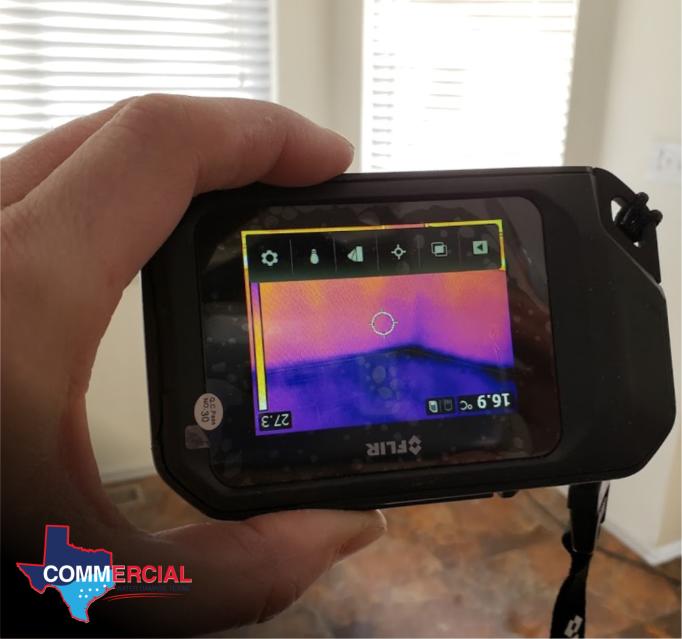
To find the true spread, technicians scan walls and floors using meters and infrared cameras. Then they sketch each wet zone on a site diagram and check it against readings from unaffected rooms. As a result, the scope covers every wet area, not just the visible stains. Our water damage removal page explains how crews track hidden moisture.
Factor 3: Materials in Austin Water Damage Repair
Meanwhile, different materials react to water in different ways:
- Concrete slabs soak up moisture slowly and give it back slowly, so they need patience.
- Gypsum board pulls water upward like a sponge and may need a flood cut.
- Batt insulation traps moisture for days, so replacement is common.
- Carpet tiles can sometimes dry, while carpet pad usually goes.
- Wood and laminate can swell, cup, or delaminate.
- Ceiling tiles droop and discolor quickly, and most crews simply install new ones.
The mix of materials affects both drying time and rebuild cost. For example, a suite with carpet tile and steel studs may dry faster and cost less than one with hardwood and wood framing.
Factor 4: Building Systems in Austin Water Damage Repair
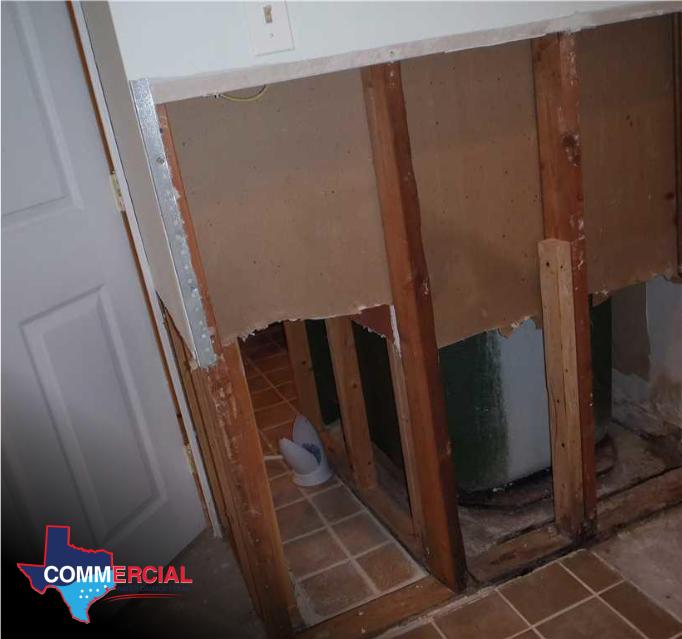
Beyond walls and floors, commercial buildings rely on complex systems. A single leak may reach breaker panels, smoke detectors, lifts, air handlers, network wiring, and access-control gear. Each one may need inspection or repair by a licensed trade.
These items can add real cost and time to Austin water damage repair. For instance, an elevator cannot run again until a certified technician clears a wet pit. Similarly, wet data cabling may need testing before an office can reconnect its network.
Factor 5: Response Time
Of course, time changes everything. Clean water left for a day or two can turn into gray water. Materials that would have dried easily may swell or start to grow mold, especially in Central Texas humidity. So a slow response usually means a bigger Austin water damage repair scope.
This is why the first few hours matter so much. Shutting off the water, calling a restoration team, and starting extraction quickly can keep the scope small.
Factor 6: Contents and Equipment
In addition, furniture, computers, files, and inventory are often part of the loss. Fortunately, crews can clean and keep some items. However, others need replacing. Depending on your policy, contents may fall under the same scope or a separate claim. Either way, list and photograph every item before anything leaves the building.
Factor 7: Austin Water Damage Repair Permits and Codes
Every Austin water damage repair must meet current codes. Inside the city, most commercial permits go through the Development Services Department. Simple drywall and flooring work may not need a permit. However, electrical, plumbing, mechanical, and structural work usually does.
Opening walls can also trigger code upgrades. For example, inspectors may ask for updated wiring or fire-rated assemblies. These upgrades expand the scope, and some policies cover them through “ordinance or law” coverage. The City of Austin website lists current permit requirements.
Factor 8: Insurance Terms
Likewise, your policy shapes what gets paid. Deductibles, limits, exclusions, and business income coverage all matter. Some policies exclude long-term leaks or flood. So read your policy early and talk with your agent. Clear documentation from your contractor helps the adjuster approve the scope faster.

How Contractors Build an Austin Water Damage Repair Scope
A good contractor builds the scope in clear stages. First, they identify the water category and source. Next, they map moisture and note every affected material. Then they list mitigation, cleaning, and repair tasks. Finally, they price each line and support it with photos and readings.
Today, most contractors use the same estimating software that insurers use. That shared format makes it easier to compare, adjust, and approve the scope.
Why Scopes Change During the Job
Even so, scopes often change once work begins. Opening a wall may reveal more damage or old problems. Drying may take longer than expected. Inspectors may require upgrades. Fortunately, these changes are normal. Still, your contractor should document each one and get approval before moving forward. Our post on common causes of commercial water damage explains where hidden problems often start.
Keeping Austin Water Damage Repair Costs Under Control
- Call for help within the first few hours.
- Request drying records and pictures to back up each line item.
- Review the scope line by line with your contractor.
- Ask how code upgrades will be handled.
- Approve changes in writing.
Five Smart Questions for Your Contractor
- Is this clean, gray, or black water, and what made you decide that?
- Where did your meters find moisture, and can I see the map?
- Which items are you drying in place, and which must come out?
- Will electricians, plumbers, or elevator techs need to get involved?
- If you open a wall and find more damage, how will you tell me?
FAQ on Austin Water Damage Repair
Why is my Austin water damage repair scope larger than I expected?
Most often, hidden moisture traveled well past the visible stain, or the water turned out to be dirty.
Can I pick my own contractor?
In most cases, yes. Your insurer still needs to review and approve the scope.
How long does the repair phase take?
Small jobs may take a week or two. Larger losses with permits can take a month or more.
Get a Clear Scope
Knowing what drives the scope puts you in control of the project. Explore our commercial repair team, or book an on-site assessment in Austin today.
