
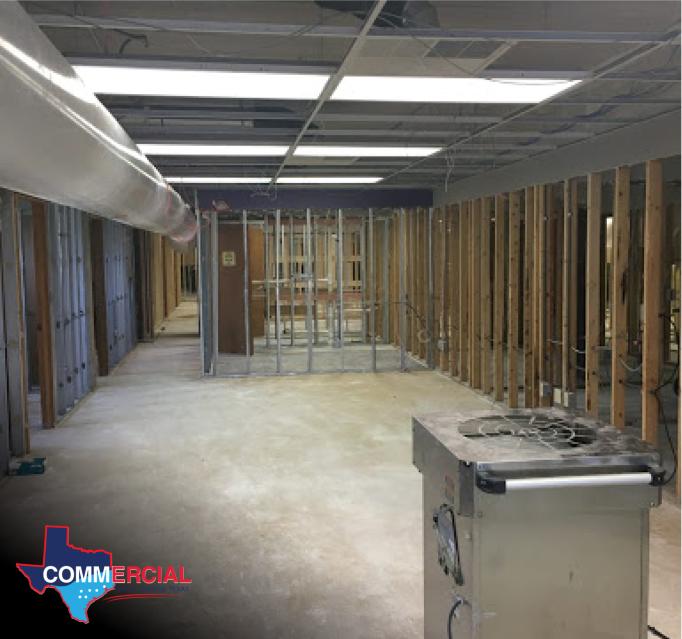
Austin flood damage repair has two big phases. First comes cleanup: removing water, mud, and ruined materials, then drying the building. Second comes reconstruction: rebuilding walls, floors, and finishes so the space can reopen. Many business owners focus only on the first phase and then feel surprised by the second. Permits, contractor schedules, and material lead times can stretch the rebuild for weeks. This guide explains how to plan both phases together, so your Austin business spends less time closed.
Owners, tenants, and property managers in Austin and nearby cities like Round Rock, Cedar Park, and Pflugerville can use it as a roadmap.
Why Flooding Hits Austin Businesses Hard
Austin sits at the edge of the Texas Hill Country, where steep terrain and thin soils send rain racing downhill. As a result, many people call Central Texas Flash Flood Alley. Creeks like Shoal Creek, Onion Creek, and Walnut Creek can rise several feet in a short time. Low-lying parking lots, underground garages, and ground-floor suites often take the worst of it.
Many Austin buildings also sit on concrete slabs with little room for water to escape. So when water gets in, it spreads quickly across large floor areas. That makes fast, organized Austin flood damage repair essential.
Phase 1: Emergency Cleanup
The first goal is to stop the damage from growing. Here is what that looks like:
- Confirm the building is safe to enter, with power off to wet areas.
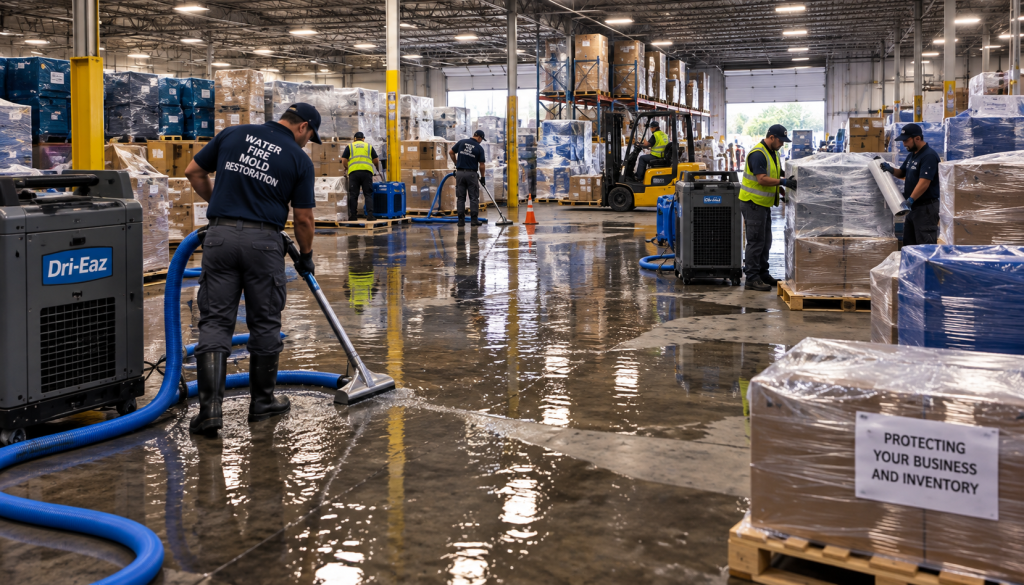
- Pump out standing water and remove mud.
- Photograph all damage before crews remove anything.
- Remove ruined contents, carpet, and furniture.
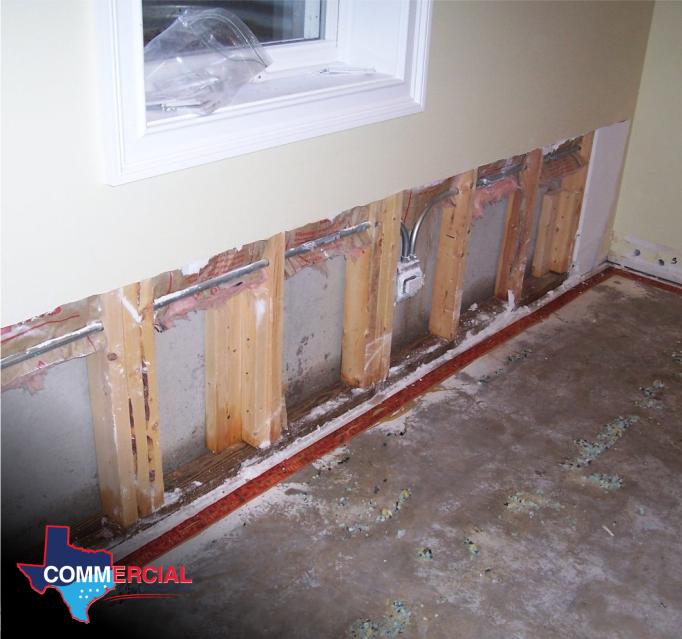
- Make flood cuts in drywall above the water line.
- Clean and sanitize all remaining surfaces.
- Set up drying equipment and track moisture daily.
Most of this work happens in the first three to seven days. Our flood cleanup services page covers the cleanup phase in depth.
Austin Flood Damage Repair: Plan the Rebuild While You Dry
Here is where many owners lose time. They wait until the building is dry to start thinking about the rebuild. Instead, start planning reconstruction on day one. While the fans run, you can:
- Get a detailed repair scope and estimate
- Share the scope with your insurance adjuster
- Choose finishes, such as flooring and paint colors
- Order long-lead items like doors, cabinets, or specialty flooring
- Check permit requirements with the city
By the time the building is dry, Austin flood damage repair can move straight into the rebuild. In other words, overlapping these tasks can save weeks.

Permits for Austin Flood Damage Repair
Simple repairs, such as replacing drywall and flooring, may not need a permit. However, work on electrical, plumbing, HVAC, or structural parts usually does. The City of Austin Development Services Department handles most commercial permits inside city limits. Nearby cities and Travis or Williamson County areas have their own rules.
Floodplain rules may also apply. If your building sits in a mapped floodplain and the damage is severe, the city may require upgrades as part of the rebuild. So check with the city early. The City of Austin website lists permit and floodplain resources.
Phase 2: Reconstruction in Austin Flood Damage Repair
Once moisture readings confirm the building is dry, reconstruction begins. A typical sequence looks like this:
- Inspections: Inspectors check electrical and other systems before walls close.
- Insulation and drywall: New materials replace what crews removed.
- Tape, texture, and paint: Crews finish walls to match the rest of the space.
- Flooring: New carpet, tile, or vinyl goes down.
- Trim and doors: Carpenters install baseboards, door casings, and hardware.
- Final clean: Crews clean the space so you can move back in.
Building Back Better
Reconstruction is also a chance to reduce future flood damage. For example, you can use water-resistant materials in lower wall sections, such as cement board or moisture-resistant drywall. You can also choose tile or sealed concrete instead of carpet in high-risk areas. Raising outlets and moving sensitive equipment off the floor helps too.
These upgrades may cost a little more now. Yet they can save a lot of money and downtime the next time a storm rolls through Central Texas.
Keeping Austin Flood Damage Repair on Schedule
Delays usually come from a few sources. Slow insurance approvals, permit reviews, and material shortages are the most common. After big storms, contractors across Austin get busy fast. To stay on track, approve scopes quickly, make finish choices early, and keep one contact person on your side for decisions.
What Drives Austin Flood Damage Repair Costs
Several factors shape the final bill. The depth of the water is the first, since deeper floods mean taller flood cuts and more ruined contents. The type of water is the second. Muddy creek water requires more cleaning and tear-out than rainwater from a roof leak. Third, the size of the space matters, along with the kind of finishes you choose for the rebuild.
Timing also plays a role. For example, after a major Central Texas storm, labor and materials may cost more because demand spikes. Meanwhile, delays in drying can add mold remediation to the scope. So acting quickly is one of the best ways to control Austin flood damage repair costs. In addition, a detailed written scope helps you and your adjuster agree on the price before work begins.
Finally, ask your contractor to separate cleanup costs from reconstruction costs. Many policies treat these phases differently, and clear line items make the claim easier to review.
Working With Your Insurance Adjuster
Insurance often drives the timeline. Share photos, moisture logs, and the repair scope with your adjuster as soon as possible. Ask what coverage applies to cleanup, contents, and reconstruction. Also ask about business income coverage, which may pay for lost revenue while you are closed. Keep copies of every document in one place.
Protecting Contents and Equipment
Contents need their own plan. Move dry furniture, files, and equipment away from wet areas right away. Then sort damaged items into three groups: keep, clean, and discard. Electronics that touched floodwater should go to a specialist for cleaning and testing. Paper records can sometimes be freeze-dried and saved. Most importantly, list every item with photos before it leaves the building, since your adjuster will need that record.
Communicating With Tenants and Customers
If you own a multi-tenant building, keep tenants updated on cleanup and rebuild dates. Clear updates reduce frustration and help them plan. If you run a business, post updates for customers on your website and social media. In addition, share a target reopening date as soon as you have one.
FAQ on Austin Flood Damage Repair
How long does Austin flood damage repair take?
Cleanup and drying often take one to two weeks. Reconstruction can take another two to six weeks, depending on scope and permits.
Do I need a permit to rebuild after a flood?
Often, yes, especially for electrical, plumbing, or structural work. Check with your city before work begins.
Can one company handle cleanup and rebuild?
Many restoration companies do both, which reduces delays and handoffs. Ask whether they hold the right licenses for the trades involved.
Plan Your Recovery
A clear plan for both phases gets you back in business faster. Visit our Austin services page, or talk with our team today.
