
Dallas VS Large Loss Restoration
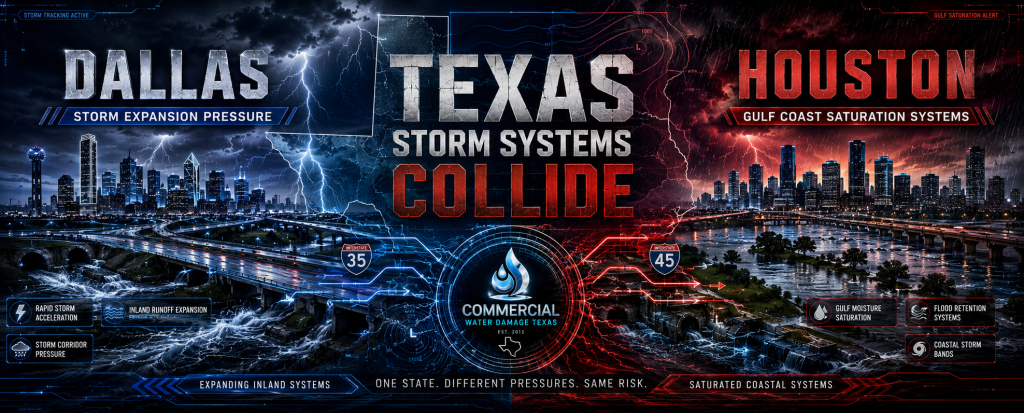
Dallas commercial properties operate inside one of the most aggressive environmental expansion corridors in the country. Rapid construction, powerful storm systems, thermal movement, flat-roof exposure, drainage overload, and large-scale infrastructure growth create constant structural pressure across office buildings, warehouses, retail centers, healthcare facilities, industrial properties, and multifamily developments throughout North Texas.
The Dallas VS Series explores how commercial water damage behaves differently across major metropolitan regions throughout the United States.
Instead of treating water damage as a single generic category, this series compares how environmental pressure systems, climate behavior, regional infrastructure patterns, and commercial construction exposure create very different forms of long-term structural stress from city to city.
- Dallas vs New York City — Rapid Expansion Systems vs Vertical Infrastructure Saturation
- Dallas vs Washington D.C. — Storm Corridor Exposure vs Aging Government Infrastructure Pressure
- Dallas vs Baltimore — Commercial Flood Saturation vs Heat-Expansion Structural Fatigue
- Dallas vs Houston — Storm Expansion Pressure vs Gulf Coast Saturation Systems
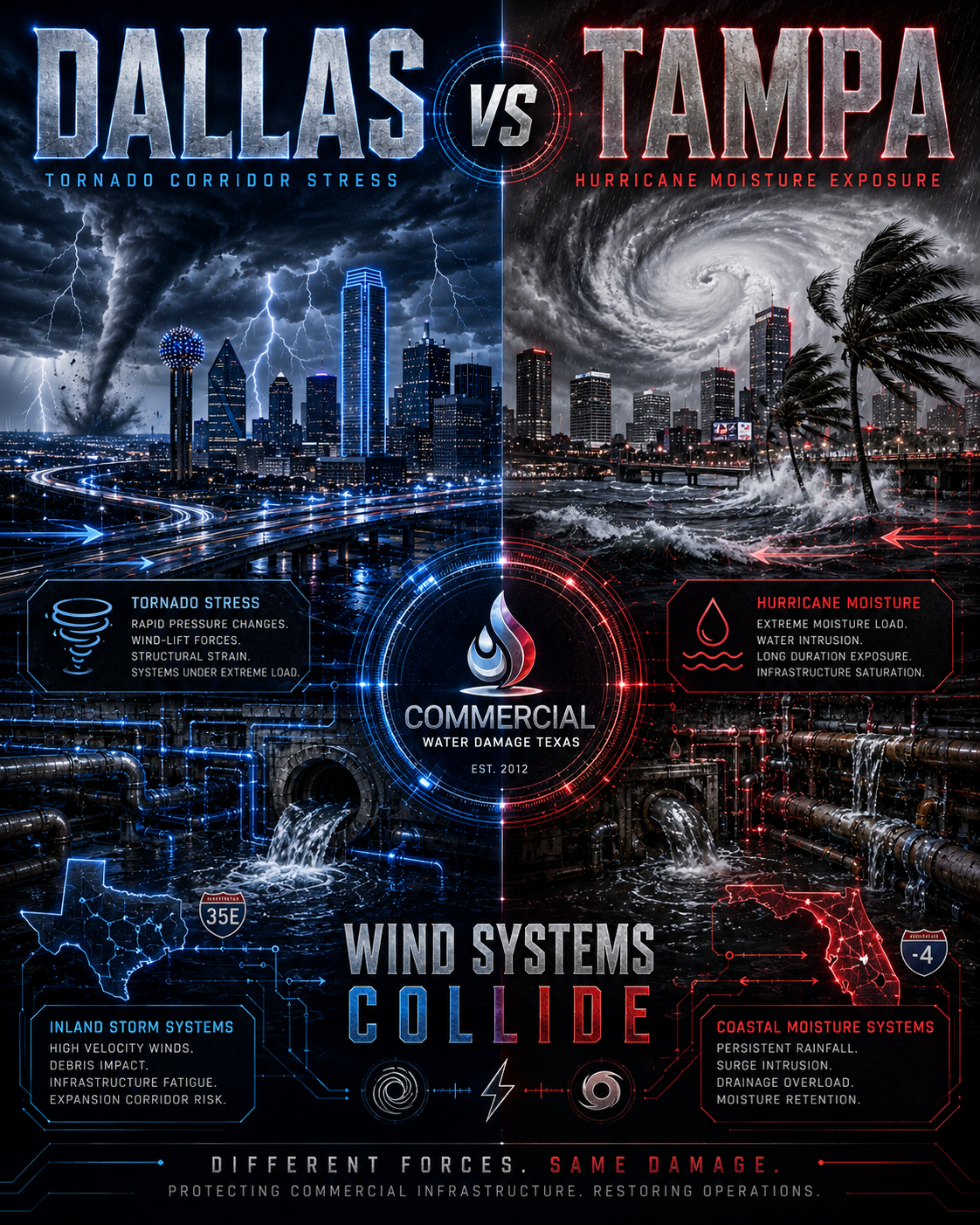
- Dallas vs Tampa — Tornado Corridor Stress vs Hurricane Moisture Exposure
- Dallas vs Green Bay — Thermal Expansion Cycling vs Deep Freeze Infrastructure Fatigue
- Dallas vs Philadelphia — Rapid Commercial Growth vs Aging Northeast Saturation Systems
- Dallas vs Phoenix — Storm-Driven Water Intrusion vs Desert Heat Infrastructure Fatigue
- Dallas vs Indianapolis — Expansion-Corridor Drainage Pressure vs Midwest Freeze-Belt Saturation
- Dallas vs San Francisco — Stormwater Expansion vs Seismic Infrastructure Stress
- Dallas vs Nashville — Rapid Southern Growth vs Foundation Expansion Pressure
- Dallas vs Seattle — Heat Expansion Systems vs Pacific Moisture Retention
- Dallas vs Los Angeles — Storm Corridor Saturation vs Drought-Driven Infrastructure Stress
- Dallas vs Jacksonville — Texas Expansion Storm Systems vs Coastal Flood Exposure

Some regions experience prolonged freeze exposure.
Others face hurricane saturation.
Some operate under extreme heat expansion.
Others struggle with aging infrastructure retention, stormwater overload, or high-rise moisture migration.
Dallas serves as a unique environmental anchor because the region experiences:
- severe thunderstorm exposure
- rapid commercial expansion
- thermal expansion cycling
- drainage pressure accumulation
- flat-roof storm vulnerability
- heat-driven material fatigue
- large-loss commercial saturation events
- fast-growth infrastructure stress
The Dallas VS Series compares these conditions with those in other major commercial regions across the country.
Featured Commercial Matchups
Dallas vs Houston — Storm Expansion Pressure vs Gulf Coast Saturation Systems
North Texas storm acceleration compares against Gulf Coast moisture persistence, hurricane rainfall accumulation, commercial flood exposure, and long-duration structural saturation behavior.
Topics include:
- large-loss commercial flooding
- flat-roof drainage overload
- stormwater migration
- long-term moisture retention
- commercial structural drying systems

Dallas vs New York City — Rapid Expansion Systems vs Vertical Infrastructure Saturation
Texas commercial growth pressure compares against dense vertical infrastructure exposure, high-rise water migration, aging utility systems, and long-duration structural moisture retention throughout large urban properties.
Topics include:
- vertical water migration
- commercial infrastructure fatigue
- high-rise moisture containment
- large-building drying logistics
- operational continuity systems
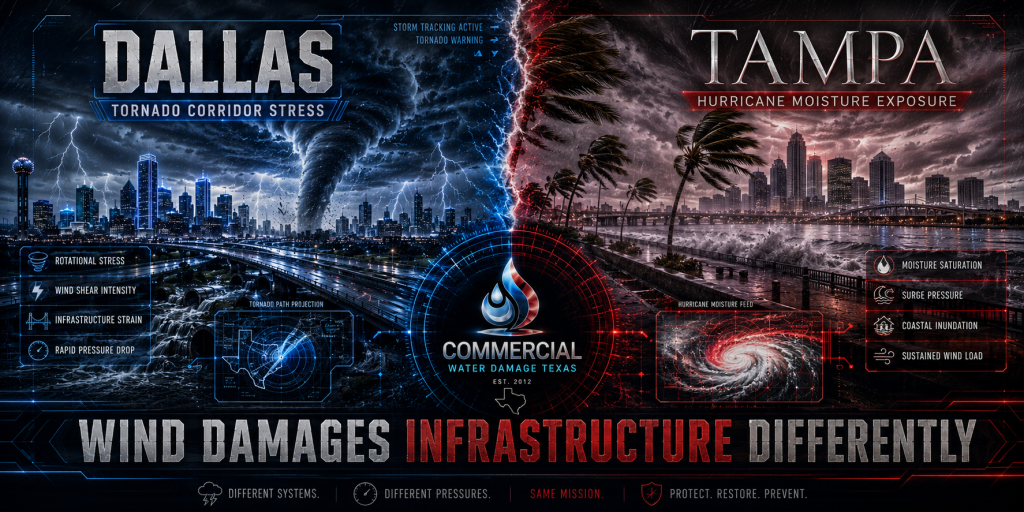
Dallas vs Tampa — Tornado Corridor Stress vs Hurricane Moisture Exposure
North Texas severe weather systems compare against coastal storm saturation, wind-driven intrusion, prolonged humidity exposure, and commercial envelope failure conditions.
Topics include:
- storm-driven commercial water intrusion
- roofing system exposure
- moisture persistence
- hurricane-related structural stress
- large-loss emergency recovery
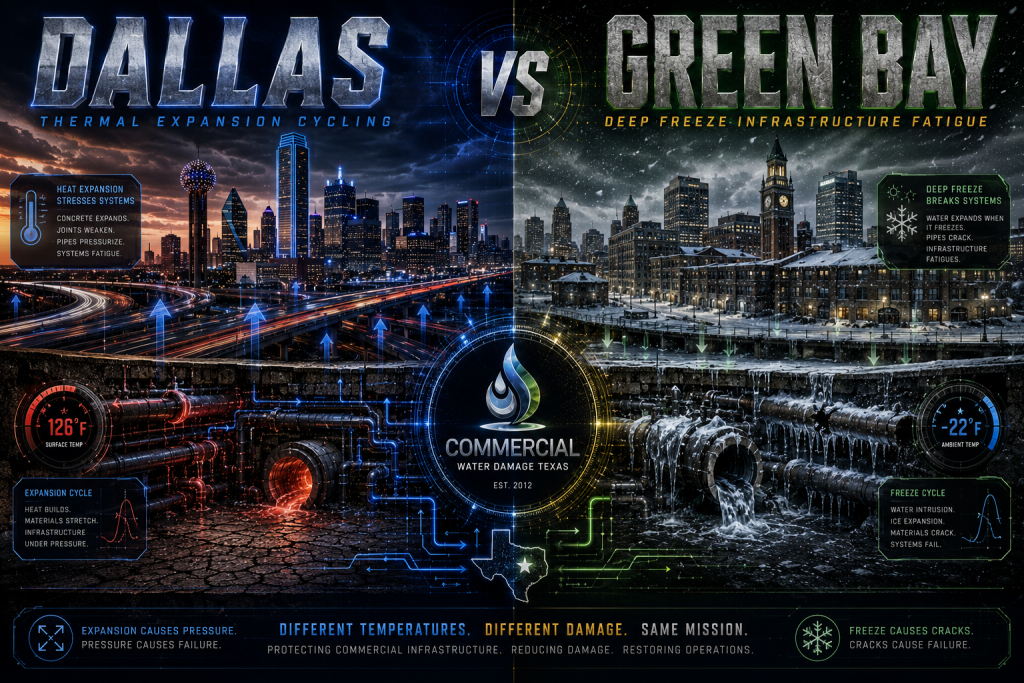
Dallas vs Green Bay — Thermal Expansion Cycling vs Deep Freeze Infrastructure Fatigue
Rapid Texas heat fluctuation compares against prolonged freeze persistence, winter infrastructure contraction, and cold-climate mechanical stress behavior.
Topics include:
- thermal movement fatigue
- freeze-related commercial damage
- roofing contraction systems
- cold-weather structural stress
- seasonal infrastructure endurance
Dallas vs Phoenix — Storm-Driven Water Intrusion vs Desert Heat Infrastructure Fatigue
Texas storm saturation compares against extreme UV exposure, prolonged thermal expansion, HVAC stress loading, and desert commercial material fatigue.
Topics include:
- heat-driven roofing deterioration
- commercial cooling strain
- expansion-contraction systems
- weatherproofing fatigue
- large-scale structural exposure
Dallas vs Seattle — Heat Expansion Systems vs Pacific Moisture Retention
Rapid thermal movement compares against long-duration moisture persistence, roofing saturation, and environmental retention pressure common throughout Pacific Northwest commercial systems.
Topics include:
- roof saturation behavior
- commercial envelope stress
- long-duration drying conditions
- moisture retention systems
- environmental fatigue accumulation
Commercial Infrastructure Behaves Differently Across America
Large-loss restoration is rarely caused by a single event alone.
Most major commercial water damage events develop through repeated environmental pressure over time:
- roofing system fatigue
- drainage overload
- structural movement
- freeze-thaw expansion
- thermal stress accumulation
- moisture retention
- stormwater intrusion
- infrastructure aging
- environmental saturation persistence
The Dallas VS Series explores how these environmental systems evolve differently from region to region — and how those differences impact commercial restoration strategy, operational continuity, drying complexity, and long-term structural recovery.
As the series expands, additional comparisons will continue analyzing how climate, infrastructure, commercial growth, and environmental pressure shape large-loss restoration behavior across major metropolitan regions throughout the United States.
